"Guillaume Geefs was in the right place at the right time"
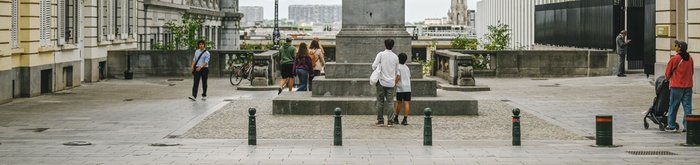
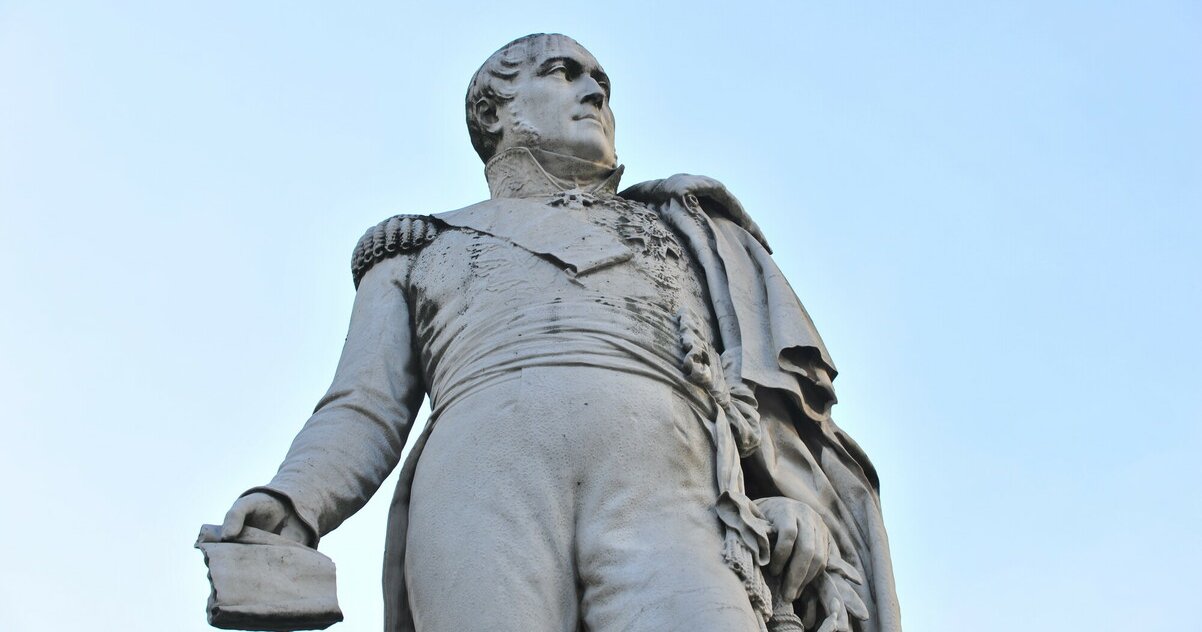
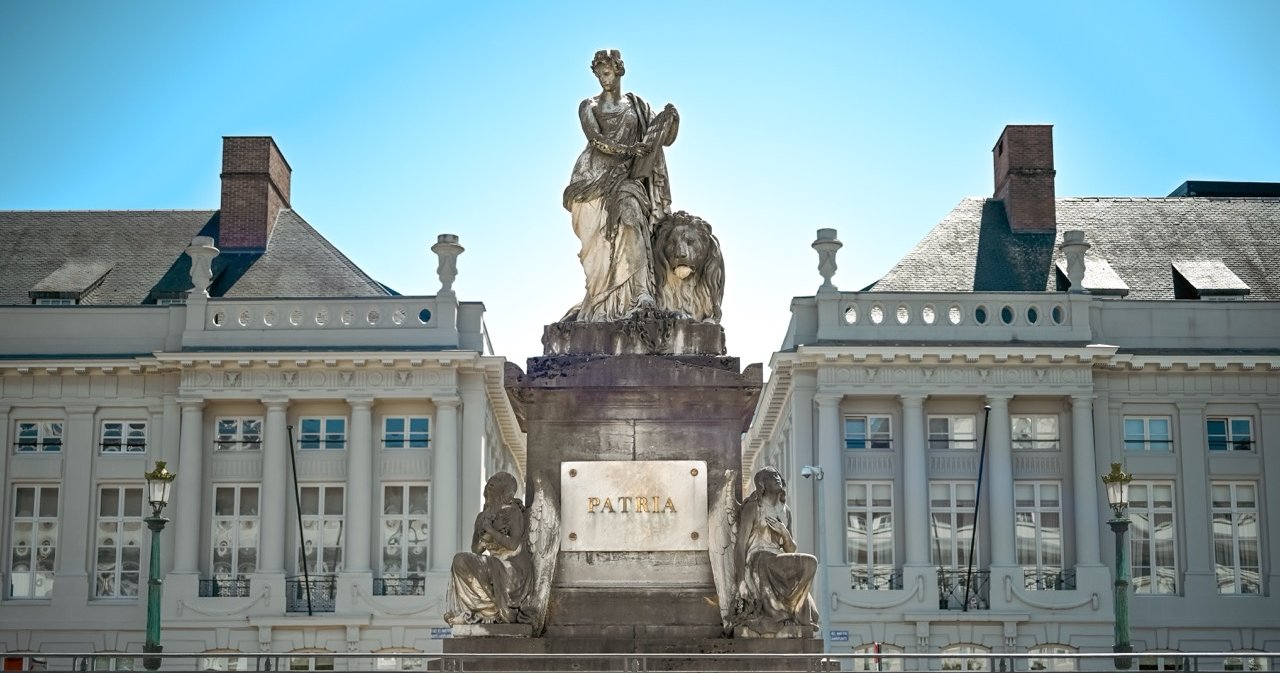
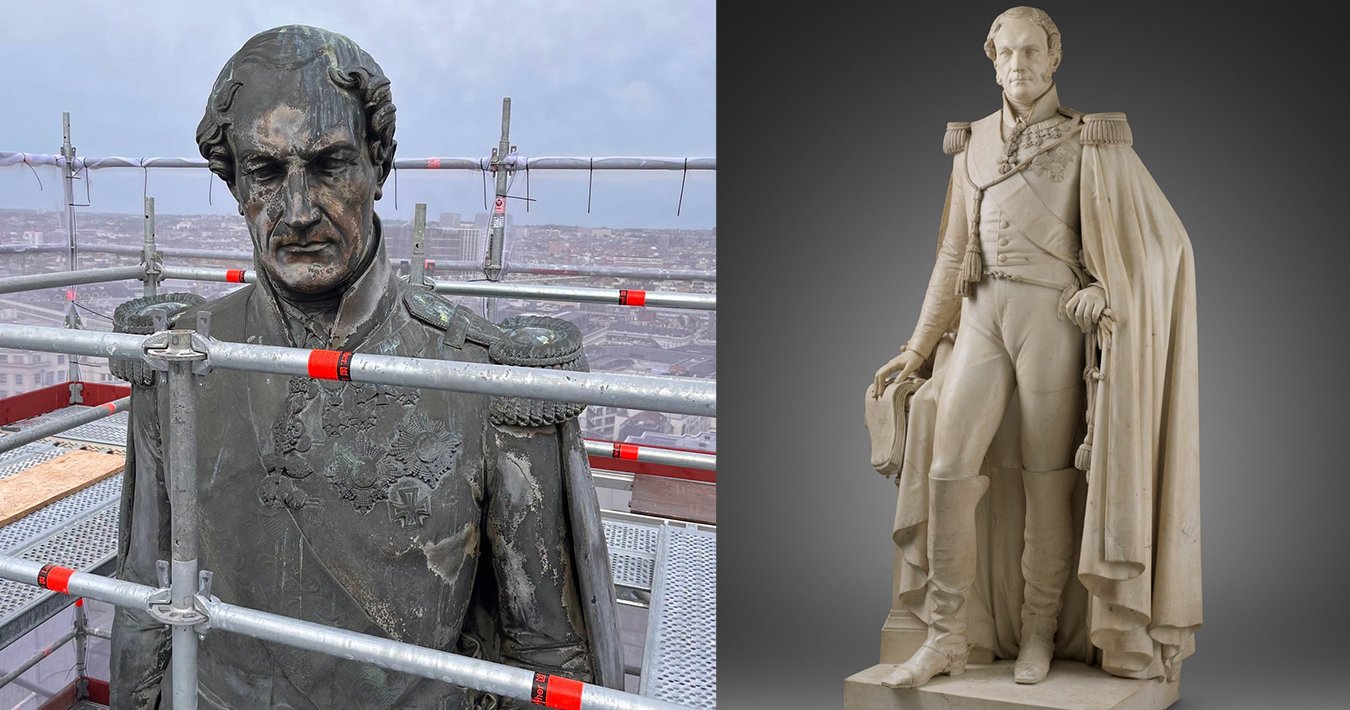
It’s strange that we don’t know the highly talented sculptor Guillaume Geefs (1805–1883) by name. His work is, in fact, everywhere. Consider, for example, the statue of Belliard at the top of the stairs between BOZAR and Warande Park, the statue of Leopold I atop the Congress Column, or the memorial on Martyrs’ Square.
Brussels, August 21, 2026
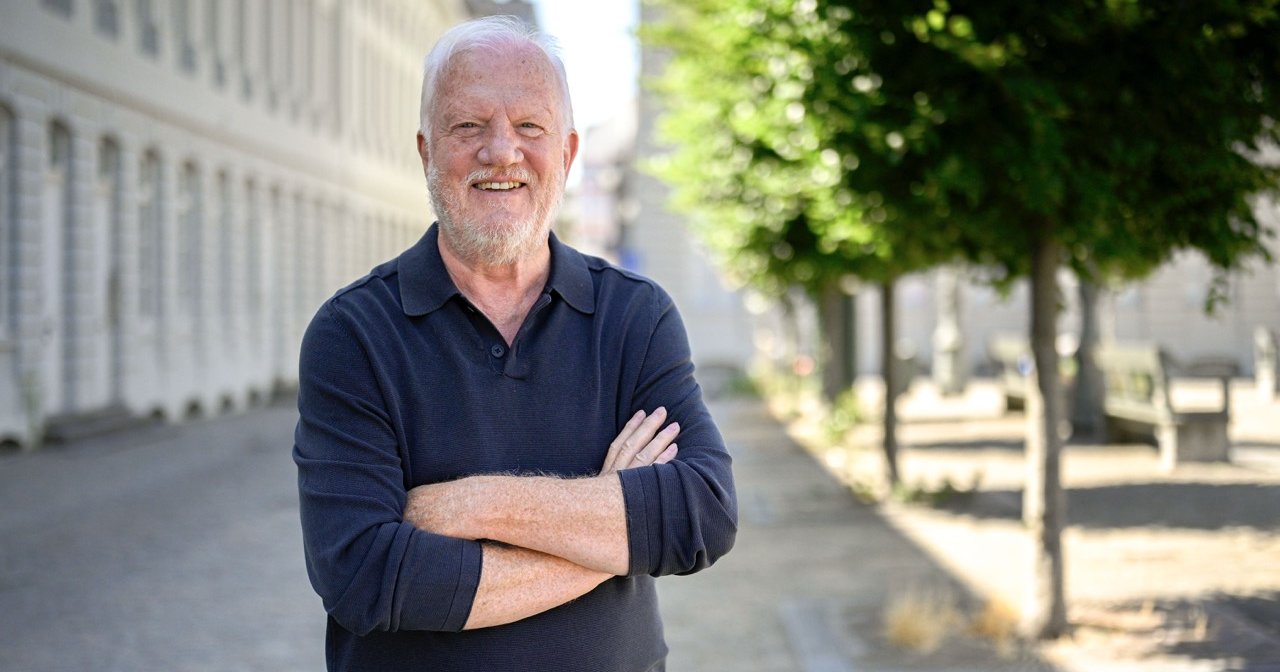
Korei guide Frederik Tinck became fascinated by this mysterious artist, delved into his life, and eventually wrote a book about him. The launch by Korei Guided Tours of the city walking tour “Guillaume Geefs: From Belliard to Leopold I” marks another step toward recognizing the 19th-century “national sculptor.” We met up with Frederik at Martelaarsplein to learn more about Guillaume Geefs, the most famous forgotten sculptor.
Who was Guillaume Geefs?
Actually, we should say Willem Geefs, because he’s from Antwerp. As a young sculptor, he was in Brussels at just the right time. That time was the birth of Belgium in 1830—the new state breaking away, the separation of the Northern and Southern Netherlands. He was very talented and quickly became famous. That’s the story in a nutshell.
How did Geefs become the sculptor of young Belgium?
Let’s just say he was lucky, although he was certainly talented. He made a name for himself in 1830, a few weeks before the riots at the Place de la Monnaie, when he won second prize at the Prix de Rome. They wanted to launch a marketing campaign to highlight Belgium’s rich history. Which is actually strange, because Belgium, as it exists today, has never existed.
What was Geefs's artistic style?
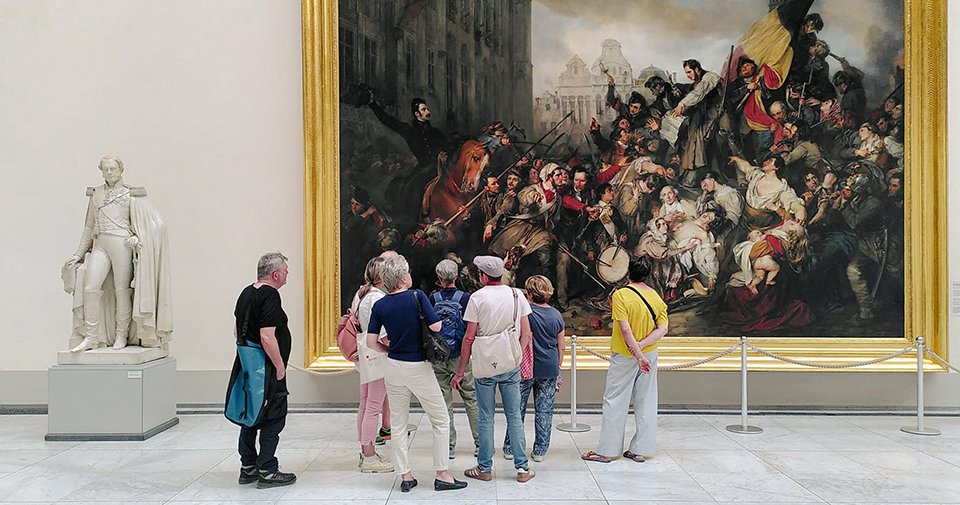
He began working in a neoclassical style, having grown up and been trained in that tradition in Antwerp. But Geefs gradually moved away from it. By the time of his work in 1850, there was no trace of it left. It must not be an idealized image—that is the break he makes—because neoclassical sculptors tend to idealize their subjects. They turn them into Greek or Roman gods. There are busts and full-length statues of Napoleon that look more like Greek gods. They have no wrinkles, no warts; he has a six-pack and no beer belly.
"It is characteristic of Geefs that he moves away from the idealized model and begins to introduce naturalism and realism. At first, he does so hesitantly."
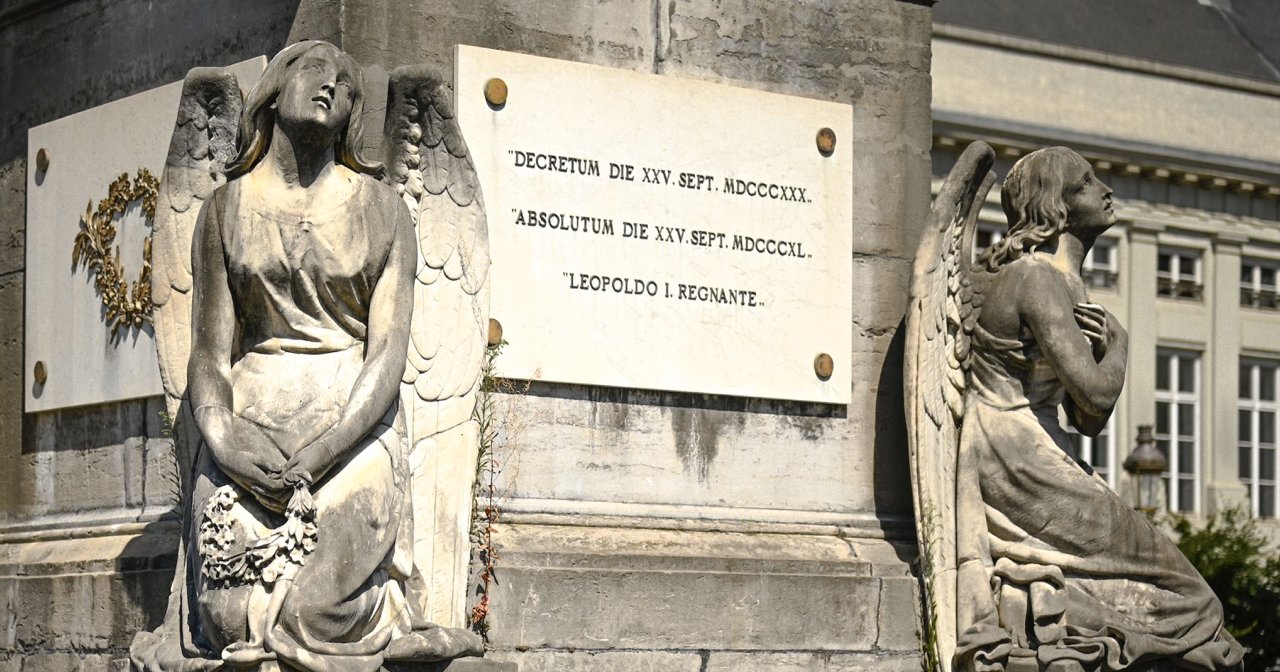
- Frederik TinckThe Martyrs’ Monument is ninety percent neoclassical. You have to look to the angels pulling faces to find any trace of Romanticism. It is only the second or third work he created. But in his sculpture of Augustin Belliard, he depicts him as he is—with a belly—and not as a Roman god with a crown on his head.
At the same time, Geefs also has a commercial mindset and adapts his designs to their surroundings. For example, the Merode cenotaph in the Cathedral of St. Michael and St. Gudula is set within a Gothic arch, so that it blends beautifully into the church.
Which of Geefs' works is the most flamboyant?
Without a doubt, the Martyrs’ Monument. But only from its early years, because I really should add the Congress Column to that list as well—though that was built much later. The Pro Patria Monument cost a fortune—a colossal undertaking—but you wouldn’t know it, since half of it is below street level. At the time, Belgium was the most industrialized country on the continent. Even before Leopold II added the Congo to its territory, the sky was already the limit.
By creating this monument, he laid the foundation for his own fortune. There is a text from that time, written after his death, which states, “il laisse des millions” [he leaves behind millions]. Unfortunately, we don’t know exactly how much, but in his day he was a millionaire in Belgian francs. I would have liked to see the exact number of millions listed. But since it was in the plural, there are certainly at least two.
How did he get so rich?
Geefs created many full-length statues of King Leopold I, because they were required to be displayed in every post office, town hall, and bank. In addition to these public commissions, Geefs made a great deal of money from busts. That’s less exciting as a work of art—you’re portraying someone exactly as they are, which leaves little room for artistic freedom.
Geefs was just the son of a baker in downtown Antwerp. There were seven brothers—seven bakers’ sons—and they all became sculptors. Can you imagine that?
How was Geefs able to create so many monuments, kings, and busts?
In his early years, he carved marble sculptures himself. He did not yet have any students at that time. But quite soon after, in 1835, he had thirty students. Over the course of his career, he must have had hundreds of students. We know the first and last names of about fifty of them.
But did he carve all his sculptures himself? No, his name is inscribed on them, and he likely gave his papal blessing during the final stages of each sculpture’s creation. Geefs must have made the clay model—that’s almost certain. That’s why a plaster model is more important for a museum collection than a marble version. That’s nothing new, by the way. Even among the Flemish Primitives, Jan van Eyck only applied the finishing touches to the paintings. We’re talking about the 15th and 16th centuries.
Is it known why he moved to Brussels?
For a long time, Antwerp was the artistic hub. Geefs realized that, in his day, the center of the art world was shifting to Brussels. That’s why he took a chance and moved here. He could have built a large villa in Antwerp, too. But he kept his finger on the pulse of events there through his brother Joseph, who was the top figure there. Geefs was the top figure in Brussels. He was not only a talented artist but also a risk-taker and entrepreneur with a keen understanding of politics, the economy, and political shifts. Geefs was also politically active himself. His best friend was Charles de Brouckère, who served as mayor of Brussels on several occasions. Geefs himself became mayor of Schaerbeek, from 1852 until, I believe, 1861.
Where does your interest in Geefs come from?
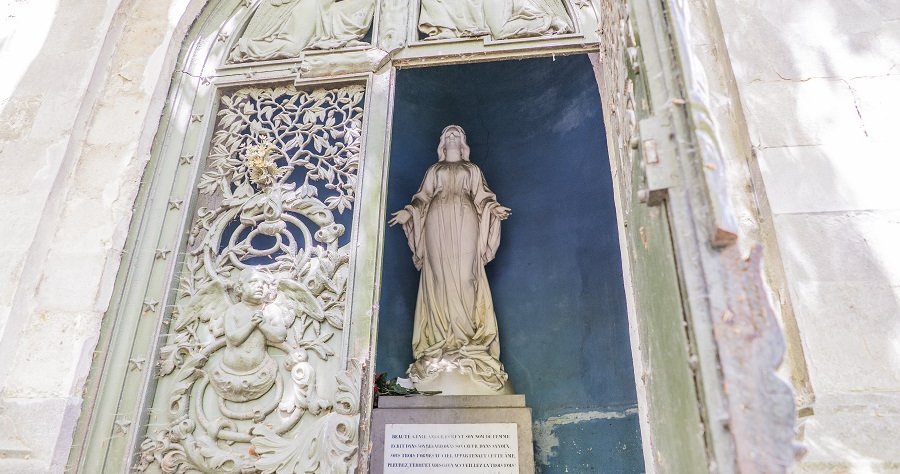
First and foremost, sculpture is very close to my heart. I’ve even done some sculpting as an amateur. Actually, the cemetery in Laken was what sparked my interest. There are about six of his works there, which is actually quite a lot for such a small cemetery. I wanted to learn more about the man and discovered that hardly anything had actually been written about him. We have to go all the way back to 1886 for a monograph, which was written after his death in 1883. I found that very special.
How did the search eventually become a book?
At first, I was going to write an article about Geefs. I started writing it and suddenly had fifty pages. Professor Emeritus Linda van Santvoort, my former art history professor, asked why I wouldn’t keep writing and turn it into a book. I already knew at the time that there was enough information to do that. That was a prerequisite.
"There were certainly many artists in the 19th century. When people talk about that period, they always focus on the last quarter: the beginning of the avant-garde. But the period before that is hardly ever discussed. That is now slowly changing. And that is—whether intentionally or not—one of the reasons why I write about that period.”
- Frederik TinckMany artists from that era are worth checking out. For example, Joseph Geefs, Guillaume’s brother, as well as Charles-Auguste Fraikin, Eugène Simonis, and painters such as Eugène Verboeckhoven and Louis Gallait. Names that are now known only as street names and streetcar stops. This is the only way they remain somewhat known.
How were you able to reconstruct Geefs's life and work?
It took some searching, but there was a great deal of information to be found in sources from Geefs’s time. Reviews of the art salons where he exhibited, for example. And in art magazines. I think it’s such a shame that they no longer exist in that form. They were full of articles—not just about sculpture, but also about painting, music, and so on. There was much more to be found than I had expected. Otherwise, my book wouldn’t have been written.
Are there any things you haven't been able to figure out?
He had a massive villa on what is now Paleizenstraat. It had horse stables and studios. Someone wrote about “l’usine Geefs” [the Geefs factory] during that period, so he must have had dozens of people permanently employed. Not a single photo or postcard of it can be found. The municipality of Schaarbeek has an archive with a large collection of postcards; we looked through them all, but the photos on them always show the section of the street just before or just after it.
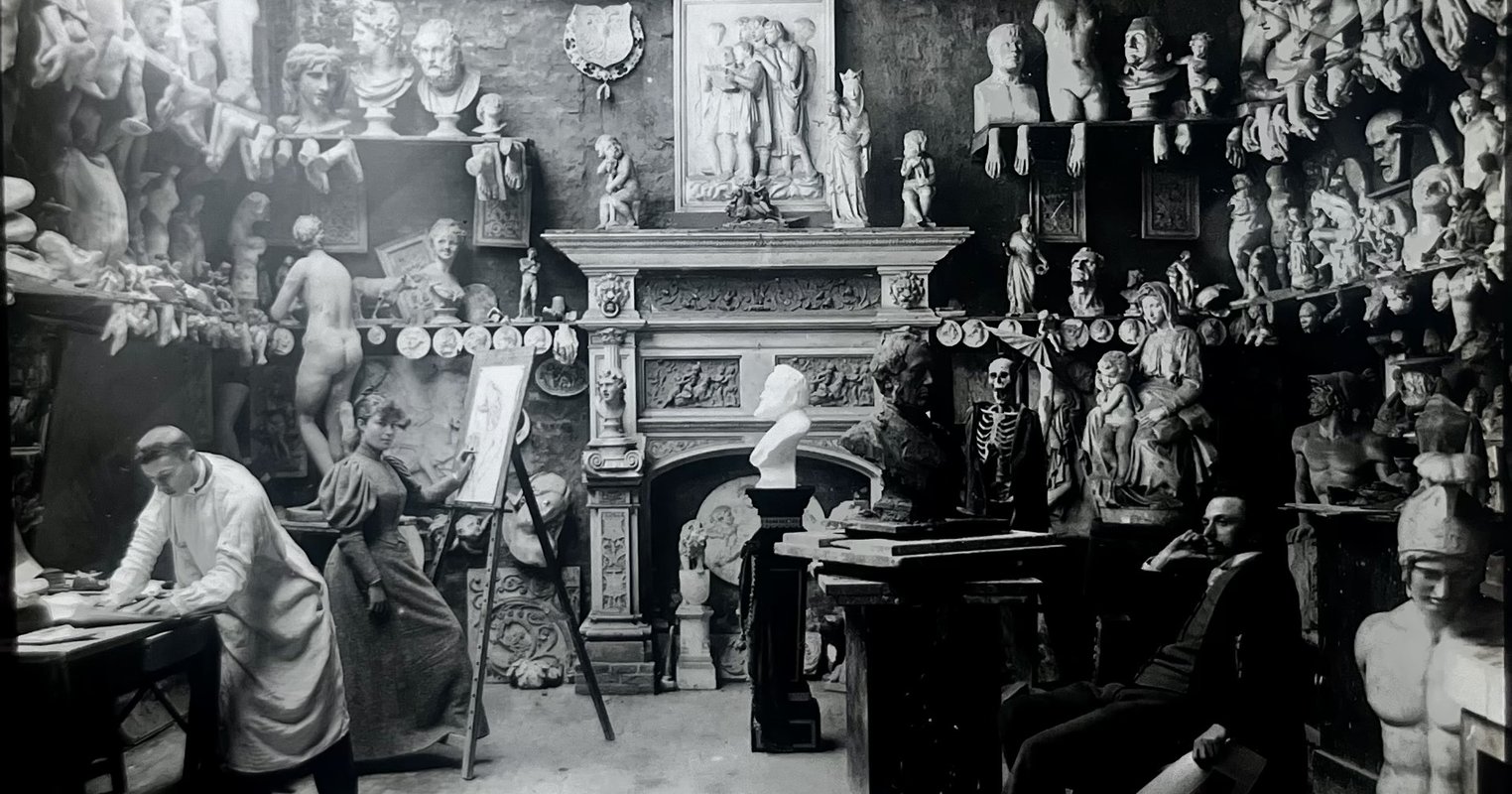
There aren’t any photos of his home, but there is one of the interior of his largest studio. Finding things like this are eureka moments. This photo is part of Jonathan Mangelinckx’s private collection; he was incredibly proud, and I was overjoyed. You can see the photo in my book—it had never been published before. It’s a one-of-a-kind photo.
Speaking of another Antwerp native in Brussels: you presented a copy of your book to Prime Minister Bart De Wever. How did that come about?
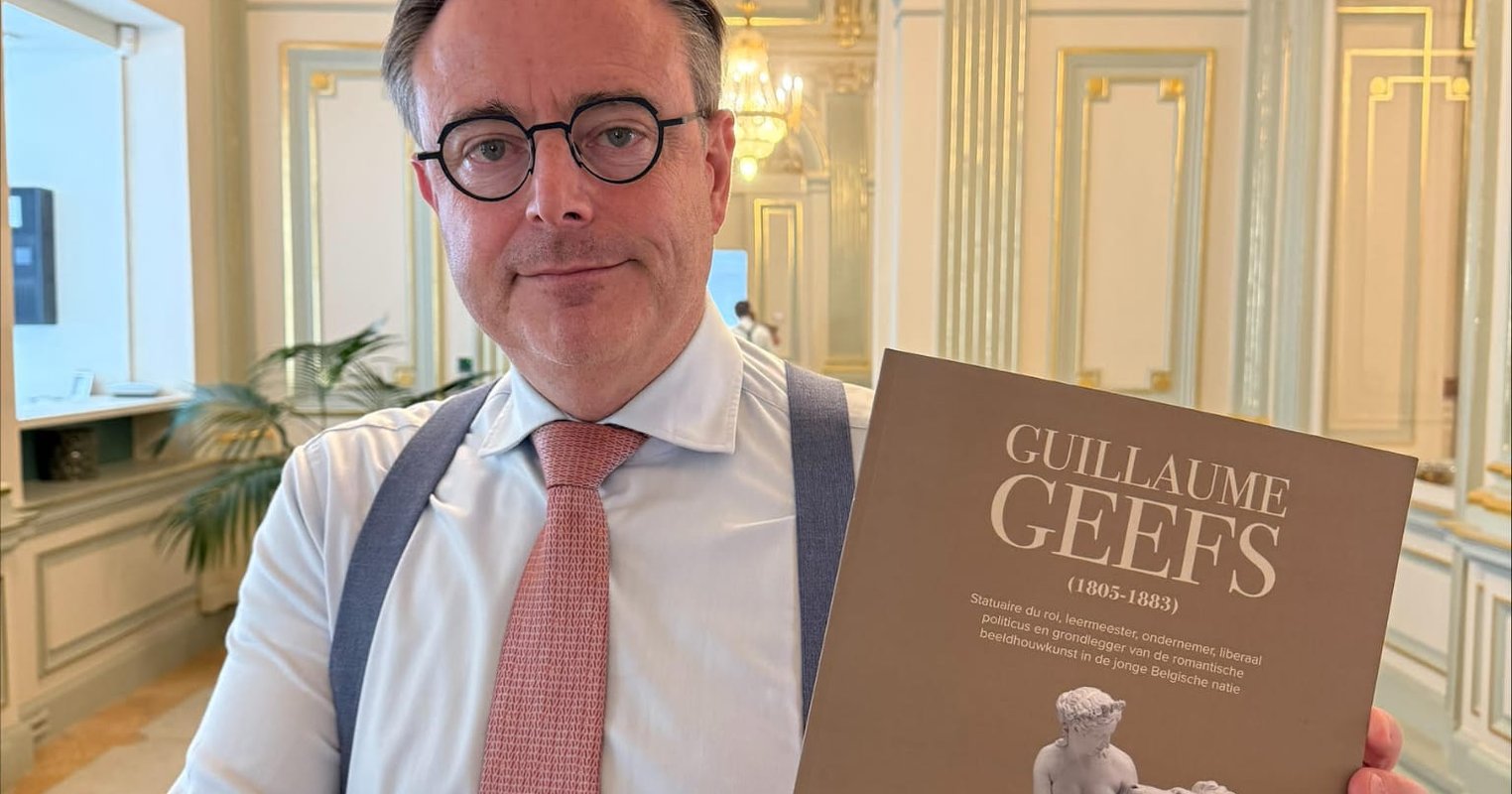
I came into contact with him through a book I had written earlier about another forgotten figure, the painter Edouard De Jans. He is one of the five painters who decorated the hall of the Schoon Verdiep at Antwerp City Hall. At the time, I was invited to present that book to Bart De Wever, who was mayor at the time. He had set aside fifteen minutes for it in his schedule. We ended up walking through City Hall for three-quarters of an hour. De Wever was truly fascinated. Recently, I had told him in an email that I had written this book about Geefs. This time, I wasn’t given 45 minutes.
Why should we take the guided tour you developed for Korei?
Because I’m a pretty cool guy. [Laughs] No, because it provides a good portrait of an artist from that period, and through that, you’re telling the story of Belgium’s origins. The two are inextricably linked. Geefs could only have become Geefs at that pivotal moment in history.
Finally: What is your favorite work by Geefs?
The Lion in Love at the Royal Museums of Fine Arts of Belgium. I think I’m a bit of a romantic—I think anyone who’s sensitive to art is. That sculpture is the epitome of a romantic sculpture; it doesn’t get any more romantic than that. There’s a close-up photo in the book where you can see the lion’s mouth and expression. That’s how someone in love looks. I think that’s beautiful.
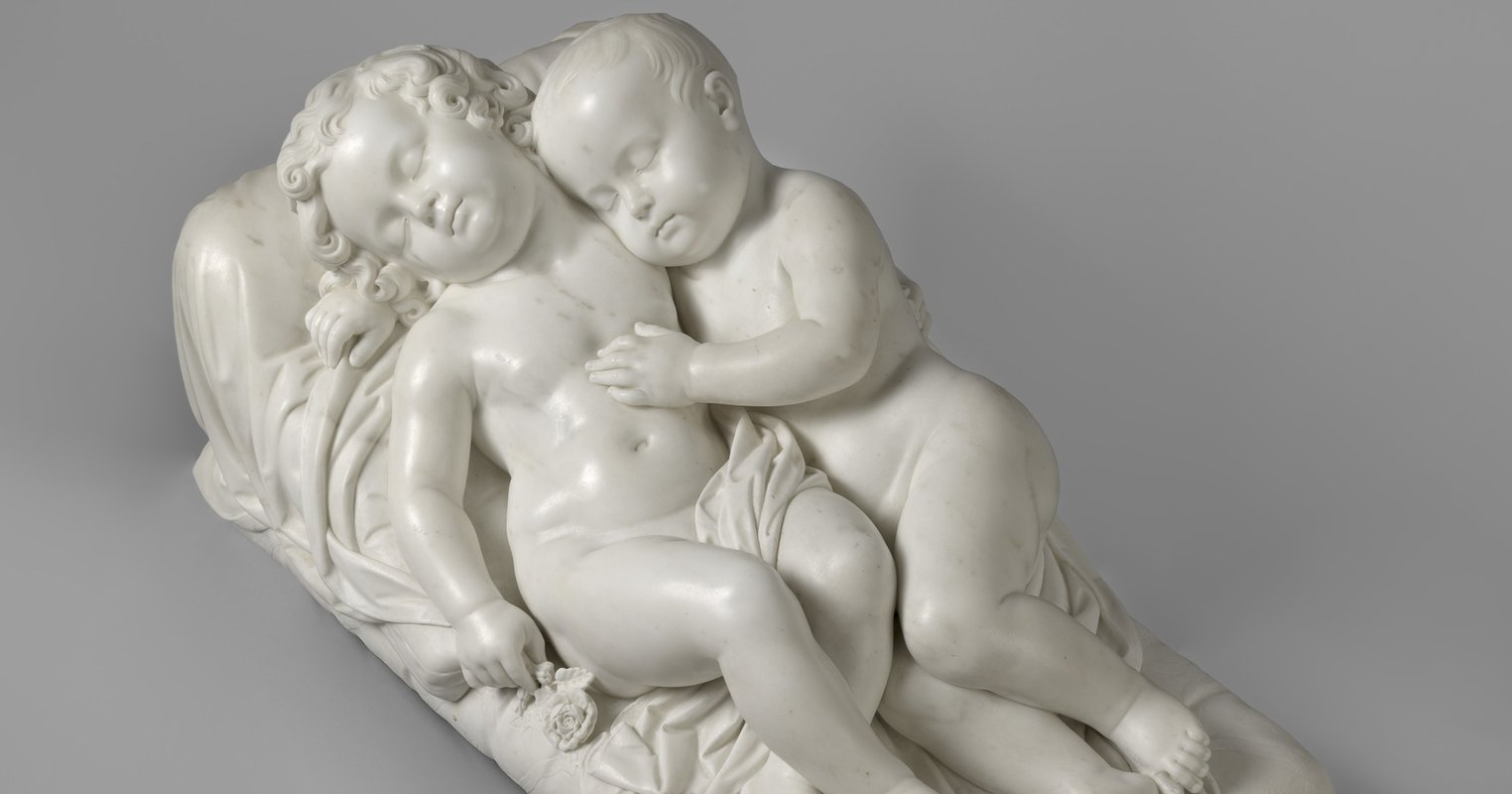
There are other works that have a very romantic feel to them. Those two children in England, part of the Royal Collection Trust. They were purchased as a gift for Queen Victoria by King Albert, through Leopold I’s connection to the British royal family. Leopold I was a frequent guest at the Geefs’ home, sometimes to pose for portraits or perhaps to have a bottle of wine—though the latter is not documented. That’s my romantic interpretation, but I’m convinced it’s true.
Would you like to follow in the footsteps of Guillaume Geefs with your group? Then book the guided tour Guillaume Geefs: From Belliard to Leopold I. Or take a look at our calendar, where we occasionally offer the city walk to individuals.
The Book by Frederik Tinck Guillaume Geefs, the King’s Sculptor is available for purchase at the KMSKB store.
