
“The Palace of Justice has a profound effect on many people”
Meeting with the architect regarding the restoration of the Palace of Justice in Brussels
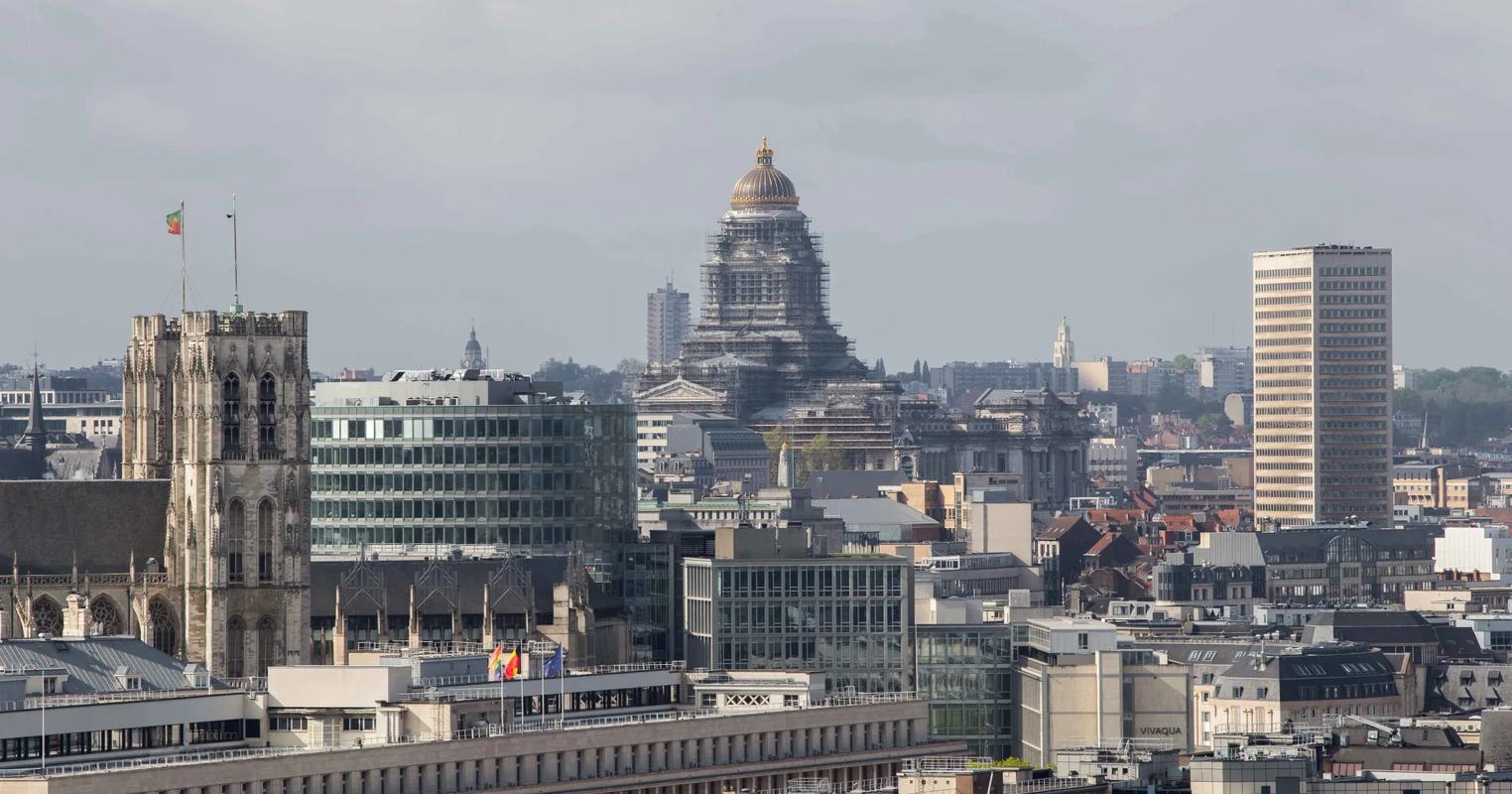
The removal of the scaffolding from the front of the Palace of Justice made headlines last summer. After forty years, the building, which was designed by Joseph Poelaert, revealed its true face. Artisans restored Athena’s white face and sharpened the fangs of the many lions adorning the building. Architect Albertina Depelsmaeker is overseeing the project on behalf of the Belgian Buildings Agency and took the Korei guides along during the final phase of the restoration of the main entrance.
Brussels, November 23, 2026
Want to visit the Palace of Justice in Brussels yourself? Check out our offers for groups. Individual visitors can join a guided tour listed in our calendar.
The Palace of Justice seems to be best known for the scaffolding that has been there for decades. Can you tell us more about that?
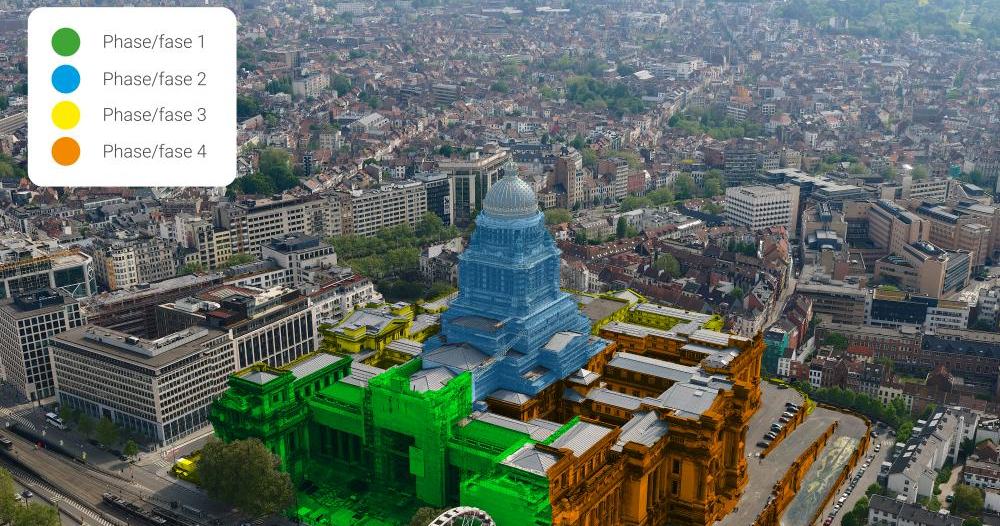
The scaffolding was erected for safety reasons. Its primary purpose was to catch falling debris. However, it was also used to restore the dome and to access specific higher areas on an ad hoc basis for urgent repairs. The building has already undergone several restorations prior to the current project. The scaffolding that can still be seen today is located around the base of the dome and will be used in the next restoration phase.
Is it true that new scaffolding was once put up to restore the old scaffolding?
To facilitate the restoration of the Palace of Justice’s façade, the existing scaffolding was modified to meet current safety requirements. It was also modified for the second phase of the façade restoration, which involves the extensive base of the dome and is set to begin in 2027. Thus, the scaffolding was adapted to meet safety standards so that it can be used safely for the upcoming restoration work.
What has surprised you the most about the building so far?
The attention to detail is impressive. Today, it would be difficult to devote so much time, craftsmanship, and care to so many sculpted elements in contemporary construction projects of this scale.
Can you give an example of that?
The restoration of the sculptural elements was closely monitored, with particular attention paid to ensuring the workmanship was of a high quality and authentic. For example, a snake is depicted in the attic (a raised section above the cornice of a façade that conceals the roof from view—Ed.). This had to be restored. Due to its slithering motion and the force of gravity, the snake’s belly must take on a certain shape. However, the stonemason had not refined the animal sufficiently, resulting in the snake’s belly appearing too flat. It was anatomically incorrect, so the work had to be redone. This illustrates that every detail is taken into account during restoration work. The proportions must be correct and as true to nature as possible.
So the scale of the shipyard is both very large and very small at the same time?
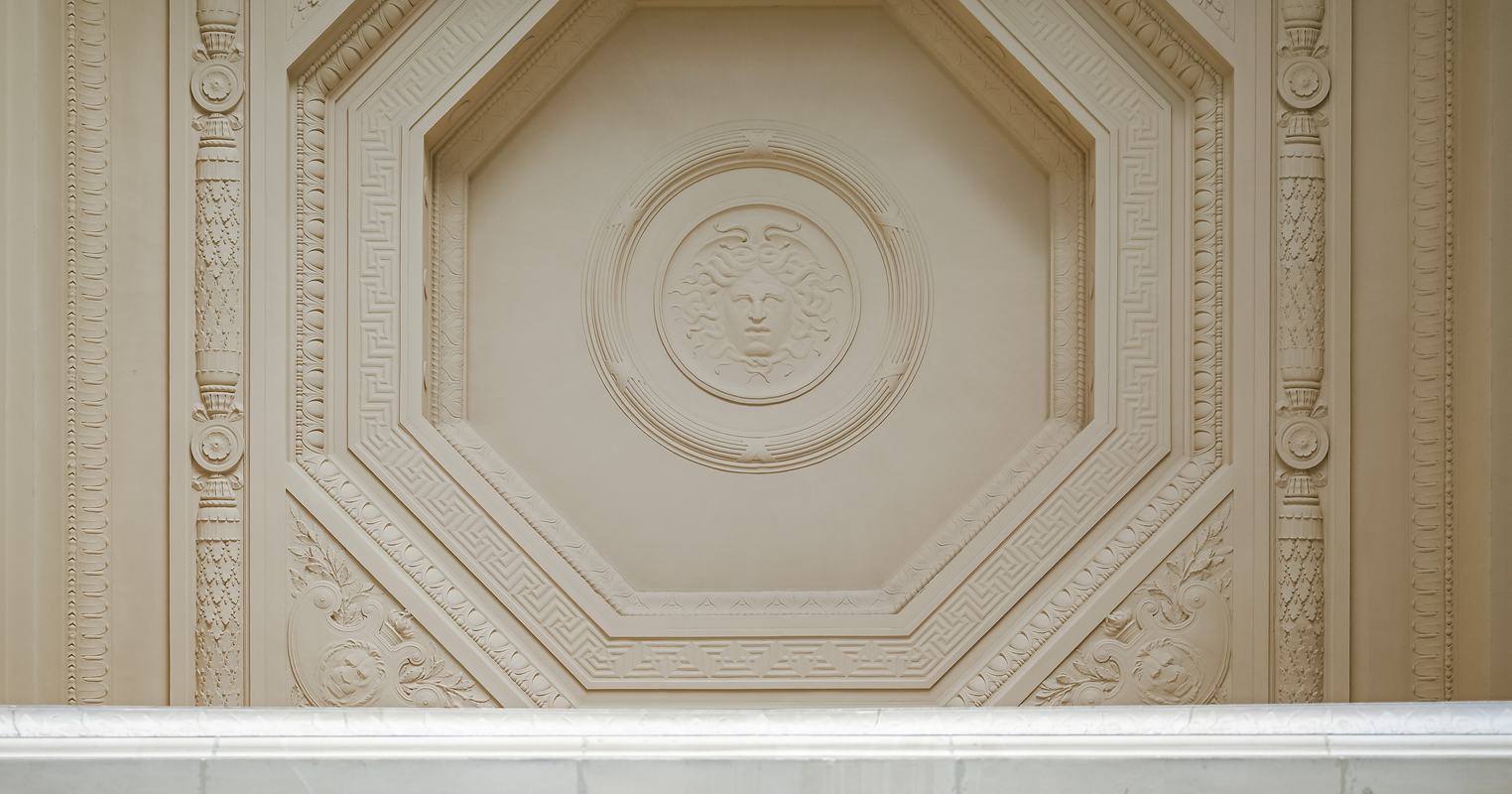
That's right. Four-metric-ton stones are being replaced, and special attention is also being paid to restoring details such as an owl's beak, the shape of an acanthus leaf, or Medusa's gaze.
What are you looking forward to as the restoration continues?
On the one hand, I’m looking forward to seeing how the building is received after the restoration, and how visitors experience it in their daily lives. On the other hand, I’m very curious about the next phase of the restoration project: the restoration of the dome’s extensive base. Carrying out and overseeing such specialised work at this height seems like quite a challenge. The conditions are more complex for both the work itself and the people who have to work there every day. Consider the logistics of transporting materials to such a height, not to mention the effects of wind and weather. It’s impressive to see the craftsmen putting their restoration expertise into practice.
What was your impression of the unveiling of the façade?
A few weeks before the inauguration, the scaffolding on the central section had already been removed, drawing a great deal of positive feedback from residents. Thanks to its location on the visual axis of Regentschapsstraat, the building could be seen from a distance, meaning the restoration attracted a lot of attention from passers-by. People stopped and looked intently, taking photos and videos. The result is certainly impressive — it has been beautifully restored. It was then that I realised this has a profound effect on people.
What must it have been like when the building was completed in 1883?
That must have evoked mixed feelings at the time. While there was a unique building that was larger than St Peter’s Basilica in Rome, the social impact of all the expropriations and demolition of homes and streets, which led to the disappearance of part of the Marolles neighbourhood, should not be underestimated.
Are there any techniques that Poelaert used during construction which cannot be applied today?
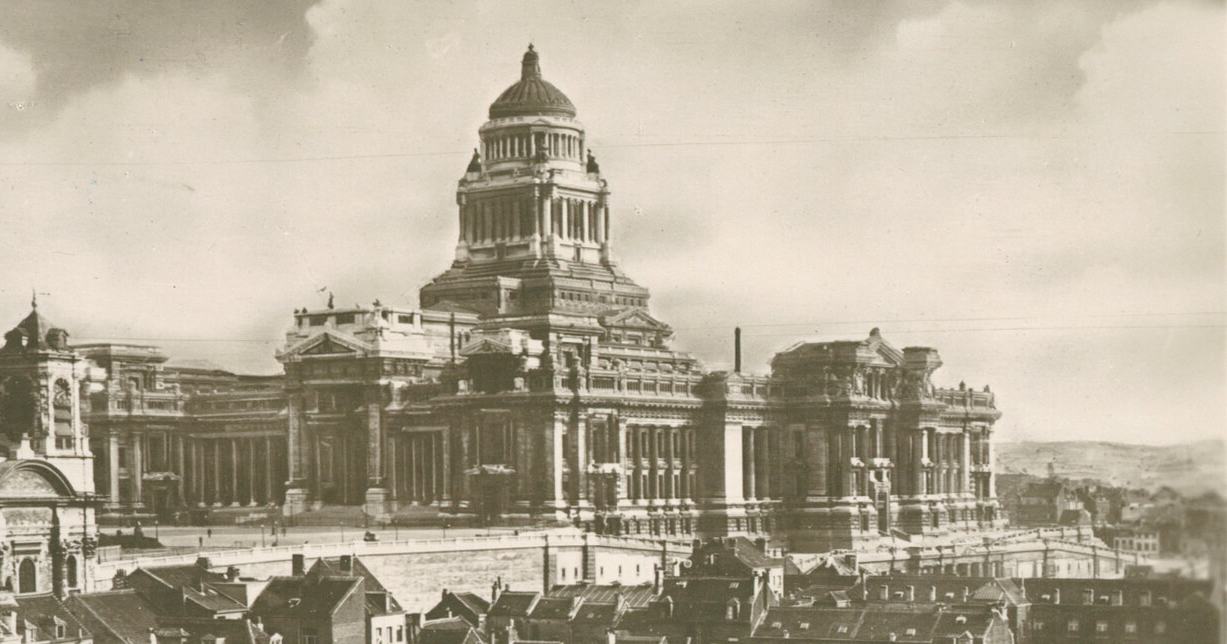
Restoring a historic building often requires a very different approach to its original construction. For instance, I learnt that a rail track ran all the way into the Salle des Pas Perdus during the construction of the base and the dome, enabling materials to be delivered efficiently and transported systematically upwards to build the dome.
Of course, these conditions no longer exist today. This poses an additional challenge for the upcoming restoration of the dome’s base: replacing natural stone elements at such great heights is a complex operation. Furthermore, the surrounding facades make the use of a conventional tower crane more complicated.
How many people were working at the construction site of the façade?
On average, between 80 and 100 people worked at the construction site.
Who are the people working at the shipyard?
The project involves a full team with diverse backgrounds, expertise and skills, including project and site managers with over 10 years' experience in restoration, master craftsmen, a specialised crane operator, stonemasons, and restorers specialising in woodwork and leadwork. Even the 'regular' labourers are indispensable on the job site. The latest digital tools are also being used, such as laser-cutting technology to create stone ornaments. Everyone contributes their expertise and craftsmanship.
In what ways do modern computer technologies enhance traditional restoration methods?
We continue to rely on traditional methods, and that is necessary. Some of the stones were cut by a robot controlled by a computer, which operates 24/7 to handle the rough work. However, a human touch is always needed for the details, especially for the woodwork.
What exactly does that robot computer do?
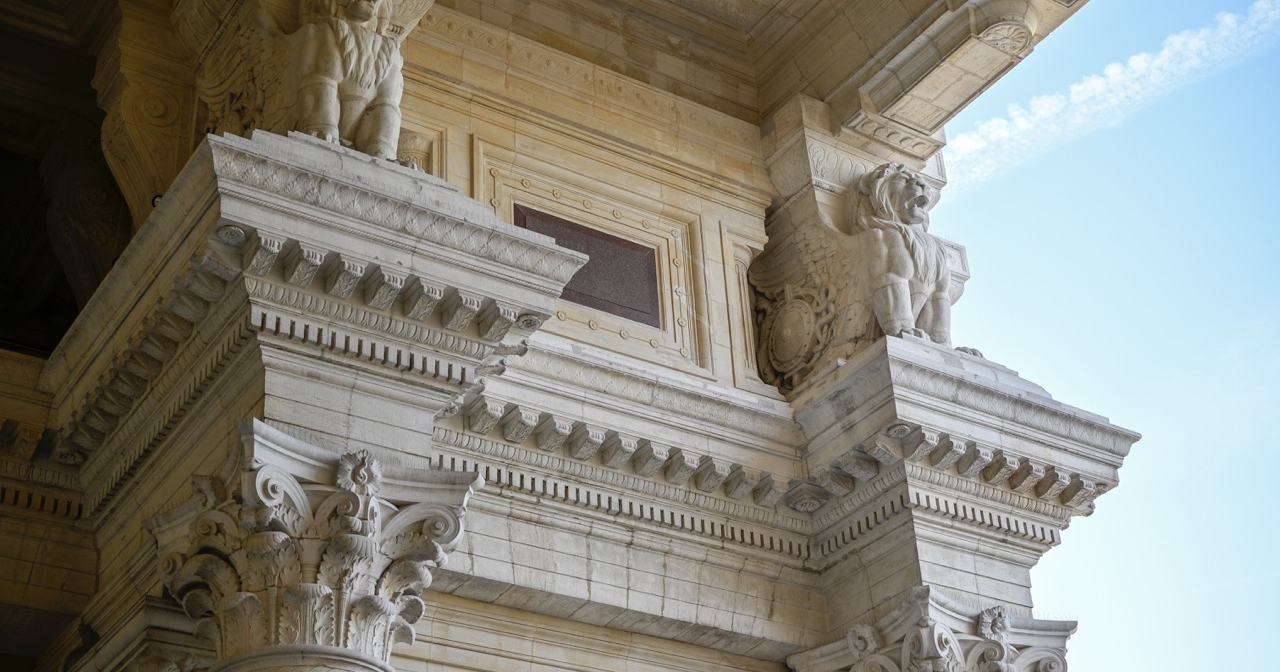
These days, restoration often starts with creating a detailed 3D model of the elements that need to be restored or replaced. Based on these measurements, a block of natural stone is placed in a computer-controlled machine that cuts out the desired shape with great precision. Advanced milling and sawing techniques are used to achieve this. For complex pieces, such as the lion heads, this process can take several weeks and run almost continuously. This work was carried out in the Bruges workshop.
This is followed by the safe transportation of the finished pieces to the construction site, where they are hoisted into their final positions. This process requires meticulous preparation and great care. The contractor bears significant responsibility, as many interventions are irreversible. If historic elements that are an integral part of the building are damaged, the consequences are not always easy to remedy. Unlike with a digital model, it is not possible to simply press “Ctrl+Z” on the construction site.
Which part of the restoration is most often underestimated?
Joint work plays a crucial role in the preservation of the building. Attention is often focused on the visible effects of damage, such as water infiltration in the halls. While these concerns are valid, the importance of the building envelope should not be underestimated. In fact, properly executed joint work serves as the first line of defence against moisture intrusion.
What do you think has caused the poor maintenance of this building to reach this stage?
The success of these types of projects hinges entirely on the resources made available, in terms of both personnel and budget, and on the priority given to the project.
So, why is it important to carry out this project now?
It is important to restore this iconic building to its former glory in order to preserve it for future generations. The Palace of Justice in Brussels is, in a sense, a symbol of justice, which gives it social significance. It is the flagship of the justice system. Although work on the Palace of Justice’s façade began in 2023, a great deal of preparatory work had already been carried out in previous years, such as preliminary studies and the drafting of public contracts.
What is it like for you to be involved in the restoration of a building that wiped out an entire neighborhood?
As part of this project, I have the opportunity to help ensure that public funds are spent wisely. I am pleased to be able to contribute to a result that serves the public interest and shows respect for our heritage and the craftsmanship of the past by conducting critical assessments and closely monitoring implementation.
What symbolic value does the building hold for you?
As the courthouse, the building holds special social and symbolic significance. It is where justice is administered, arguments are considered, and fundamental decisions are made. These functions are reflected in the building's architecture and rich ornamentation, which give it a distinctly representative character.
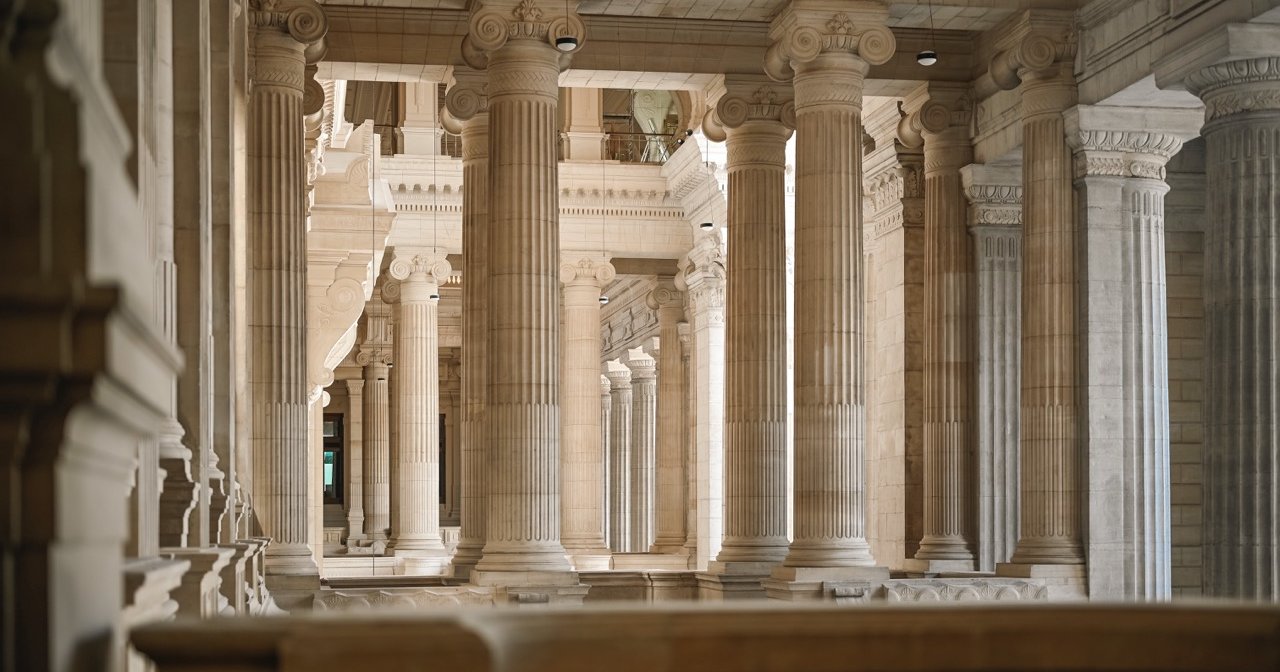
At the same time, however, the building’s scale raises questions. My knowledge of the interior is too limited to pass a definitive judgement, but as I walk around, I’m struck by how imposing and spacious the entire structure is. The succession of rooms, hallways and perspectives is all part of experiencing the building. This architecture undoubtedly impacts anyone moving through it, whether as a party to a proceeding or as a visitor.
I believe it is important to consider the experience of architecture in buildings like these. The sense of space, the interplay of light and the lines of sight all contribute to the dignity and significance of the place. After all, a courthouse is more than just a functional space: its architecture shapes the public's experience of the justice system.
About Albertina Depelsmaeker
As a senior official at the Buildings Agency, Albertina has served as the client’s representative for the restoration of the Palace of Justice on behalf of the Federal Government since February 2025. In this role, she oversees the project in terms of budget, scheduling and quality. She co-chairs site meetings, maintains contact with contractors and engineering firms, and oversees the review and approval of progress reports.
