Modernism in Brussels? Absolutely!
Modernism emerged in the early 20th century against a backdrop of industrialisation, social reform, and technological innovation. Key figures such as Le Corbusier, Walter Gropius and Ludwig Mies van der Rohe rejected historical architectural styles, instead advocating functional and rational designs adapted to modern life.
Cities such as Weimar, Dessau, Paris and Berlin became important centres of the movement. Iconic buildings such as the Bauhaus building in Dessau, the Villa Savoye near Paris, and the Barcelona Pavilion embodied modernist principles, including open floor plans, the use of new materials such as steel and reinforced concrete, and a pronounced absence of ornamentation.
Modernism also took root in Belgium, particularly in the work of Henry van de Velde and, later, Victor Bourgeois. These architects played a key role in disseminating an international, progressive architectural language.
Light
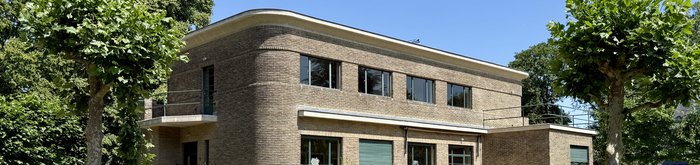
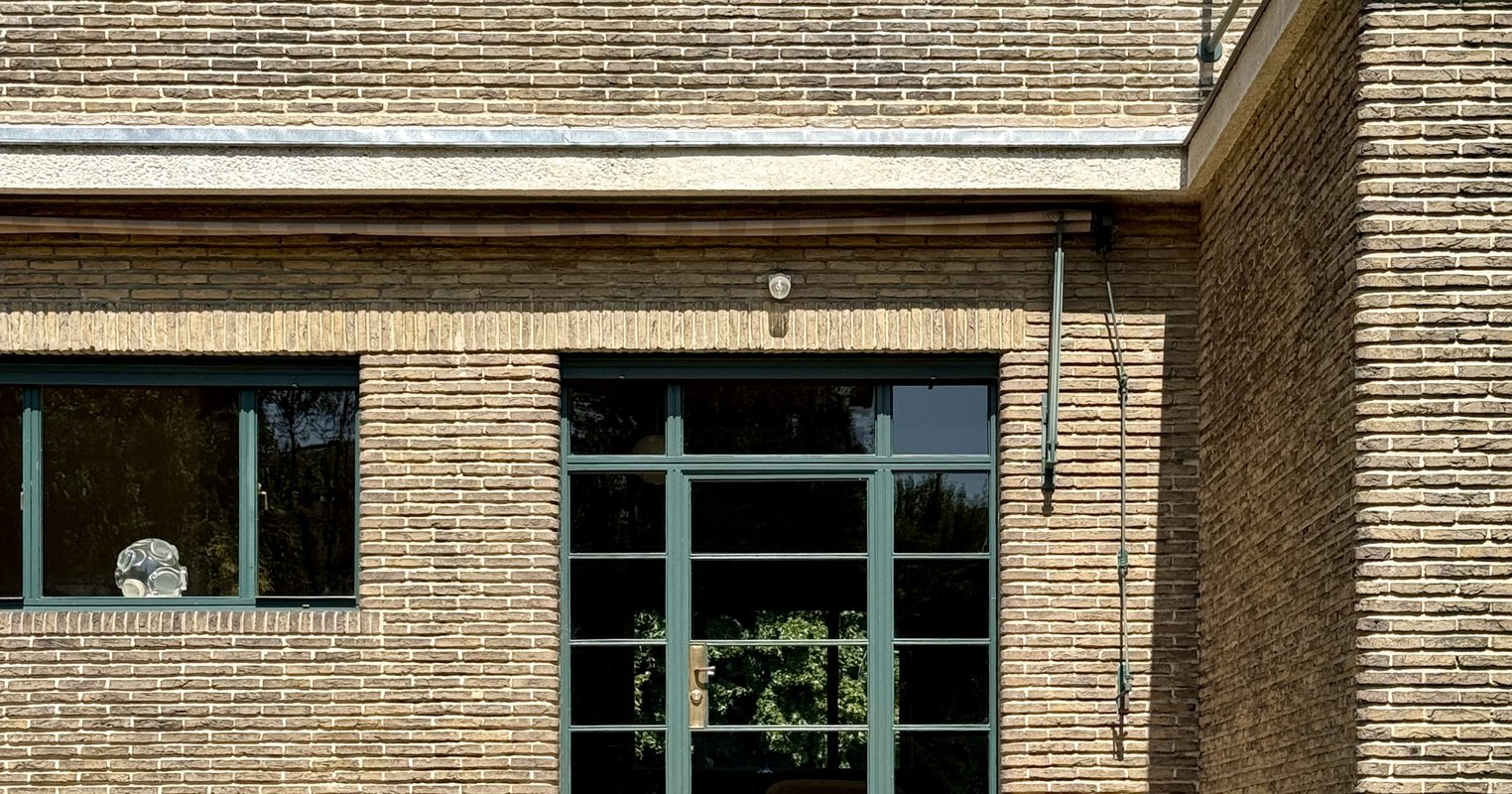
With La Nouvelle Maison in Tervuren (1927), Henry van de Velde took a decisive step towards functional and rational architecture. In this style, ornamentation gave way to clear volumes, clean lines, and well-considered spatial organisation. The building reflected his belief that form should stem from function and lifestyle — a fundamental tenet of modernism.
These principles are also evident in the Grégoire-Lagasse house in Uccle, where Van de Velde employed a restrained, almost ascetic architectural style, paying close attention to light, proportion, and the use of materials. In both projects, he presented himself less as a decorative designer and more as a modern thinker who approached architecture as a rational and social instrument for contemporary life.
Technological masterpiece
Originally the broadcasting building of the National Institute for Radio Broadcasting (NIR), the Flagey building is considered one of the most famous modernist buildings in Belgium. Designed by architect Joseph Diongre between 1935 and 1938, it was created in close consultation with engineers and acoustic specialists. The building's distinctly functional design embodies modernism: the architecture directly follows the strict technical requirements of radio studios, recording rooms and offices. The streamlined volumes, horizontal lines and use of reinforced concrete are characteristic of international modernism. Its rounded corner, topped by a turret, earned the building the nickname 'the parcel boat'.
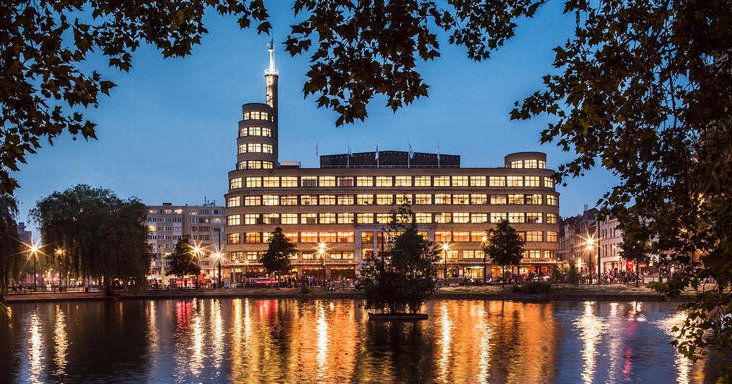
Not only was the Flagey building architecturally innovative, it was also technologically advanced, and was considered one of the most advanced broadcasting buildings in Europe. After its completion, sound engineers from the BBC came to Brussels to learn about the techniques and solutions employed.
Diongre also realised other modernist projects, including the town hall of Sint-Lambrechts-Woluwe, social housing estates, and the Church of St John the Baptist in Molenbeek. However, the Flagey building remains his most influential achievement and is an icon of Belgian interwar modernism.
Modern living
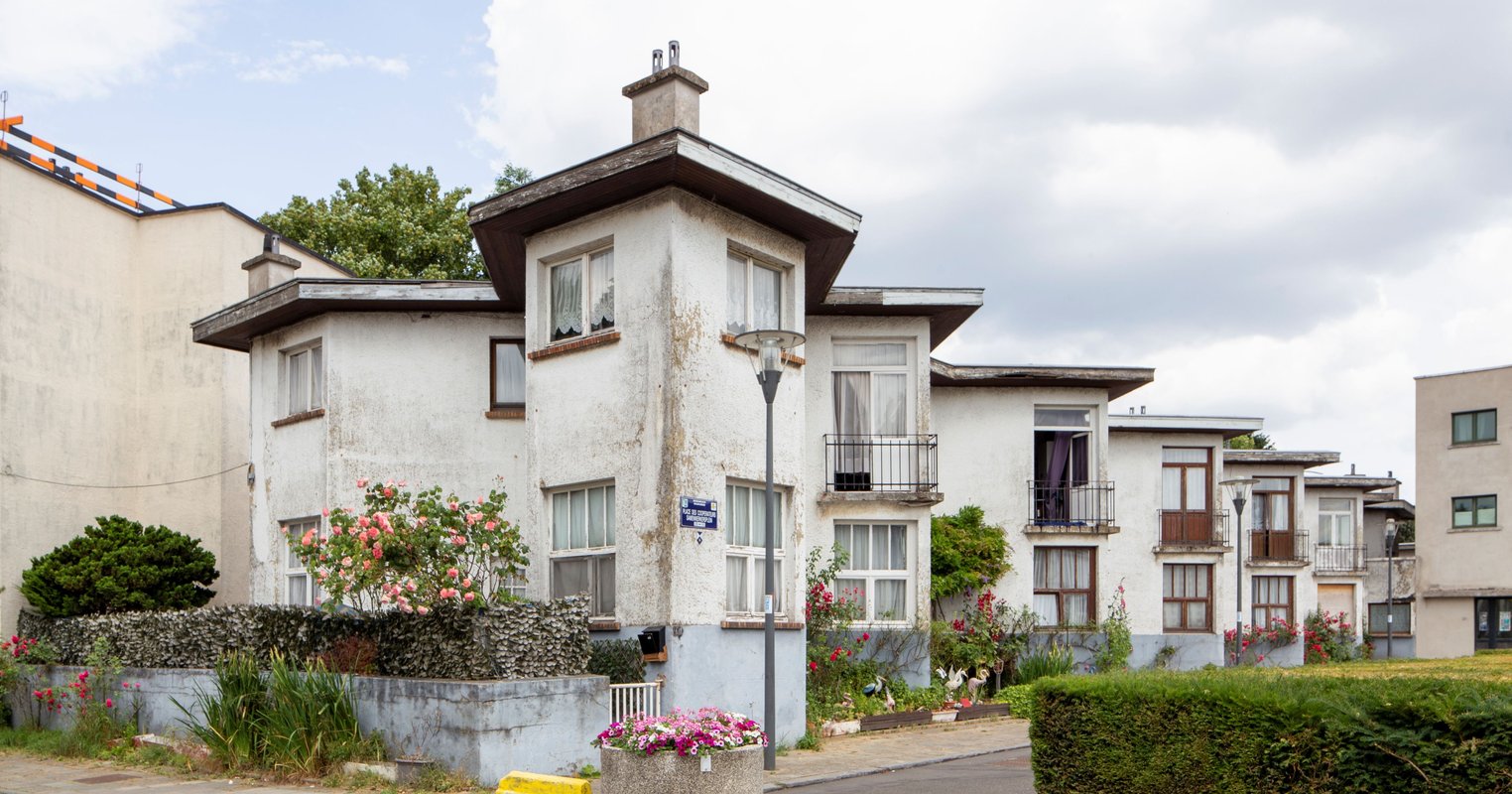
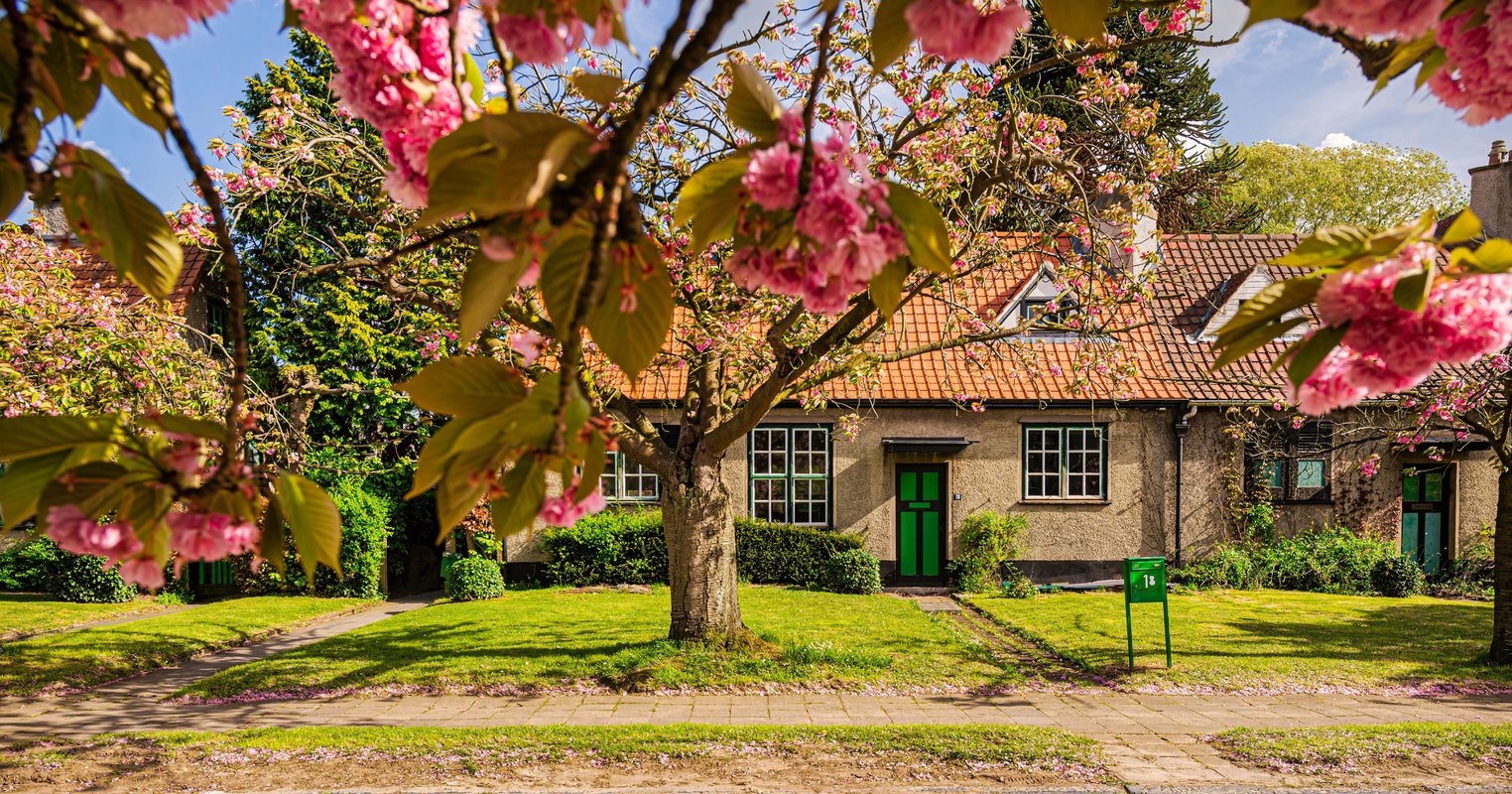
The garden suburbs of Brussels, such as Le Logis–Floréal in Watermaal-Bosvoorde and the Cité Moderne in Sint-Agatha-Berchem, illustrate how modernist principleas were applied to social housing. These projects originated in England and were inspired by the core ideas of modernism: functionality, light, air and open space for workers.
Designed by Jean-Jules Eggericx and Louis Van der Swaelmen, among others, Le Logis–Floréal combines geometric simplicity with green areas and a community-oriented design. The scale of the houses focuses on human life. The focus was not only on aesthetics, but also on improving the living conditions of workers and middle-class families.
Designed by Victor Bourgeois, Cité Moderne goes one step further by explicitly aligning itself with the international modernist movement and the ideas of CIAM (Congrès Internationaux d'Architecture Moderne). Founded in 1928, CIAM brought together European architects committed to rational urban planning, social housing, and functional architecture. Their aim was to design cities that combined light, air, hygiene and efficient use of space so that architecture could contribute to a better society.
Cité Moderne embodies this ideal, combining clean lines, simple forms and a clear structure with social objectives to create a neighbourhood that is both modernist and socially progressive.