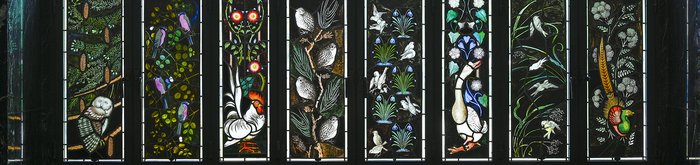
The hidden animal kingdom in the town hall of Forest
Jean-Baptiste Dewin was a Brussels architect who developed a distinctive Art Deco style, centred on decoration, symbolism and local roots. Dewin (1872–1942) worked with clean lines and geometric structures in carefully chosen materials, which he enriched with figurative and naturalistic motifs wherever possible. The choice to depict local flora and fauna is a recurring theme in his oeuvre. In the homes and public buildings designed by the Brussels architect, we see cherries, acorns and owls incorporated into stained glass, mosaics and sculptures, among other things.
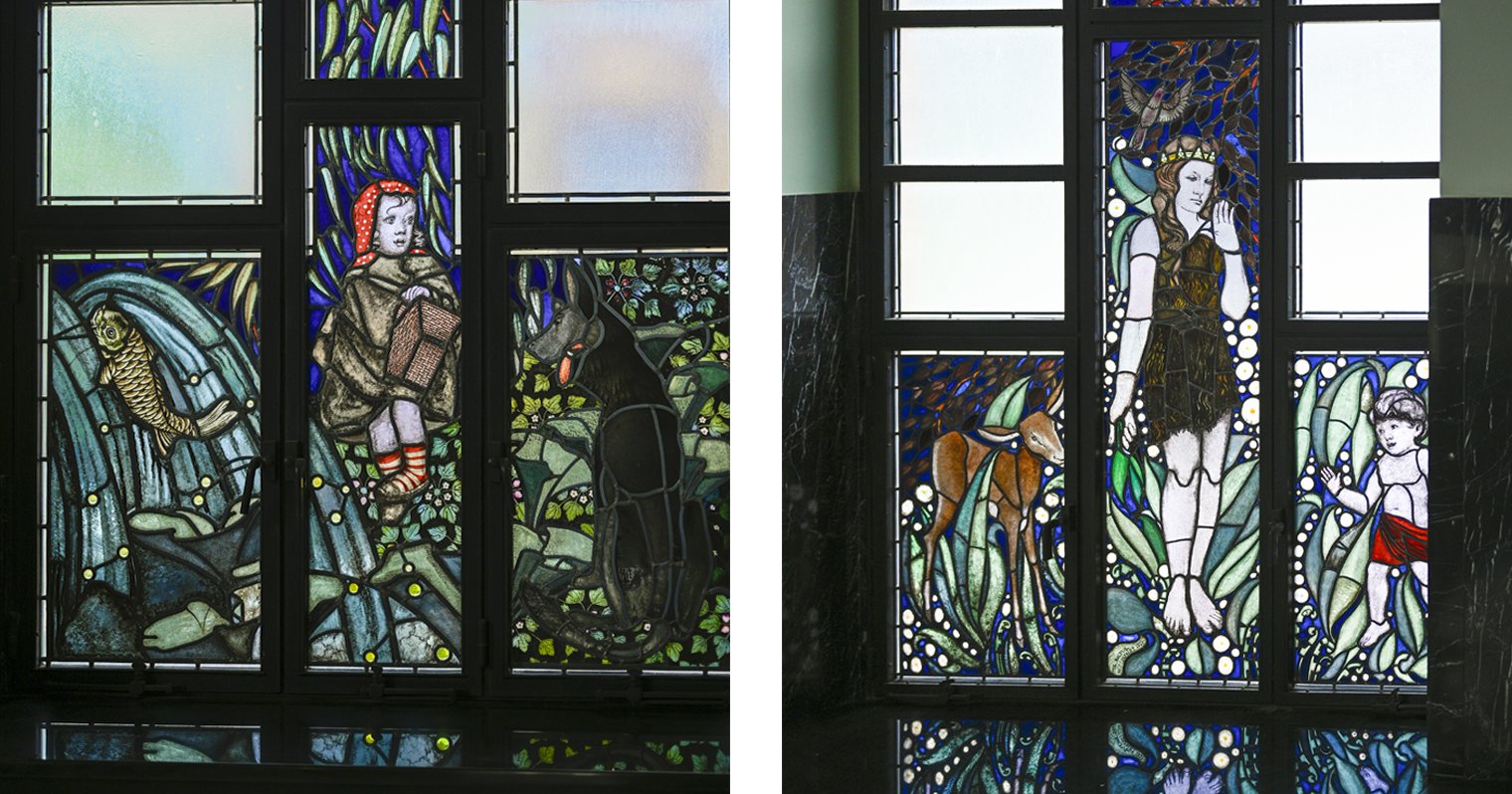
The town hall of Forest (1924–1938) is a fine example of this approach. The building combines the clear layout and monumentality of Art Deco with a rich visual language that refers to the natural environment of Forest. The façades and interior feature stylised plants, trees, birds and animals, worked in relief stone and decorative panels. Even Little Red Riding Hood was given a place in the ensemble! The decorations lend the building a symbolic layer, linking the modern building to the history of the municipality, both recent and distant.
A zoo in the town hall
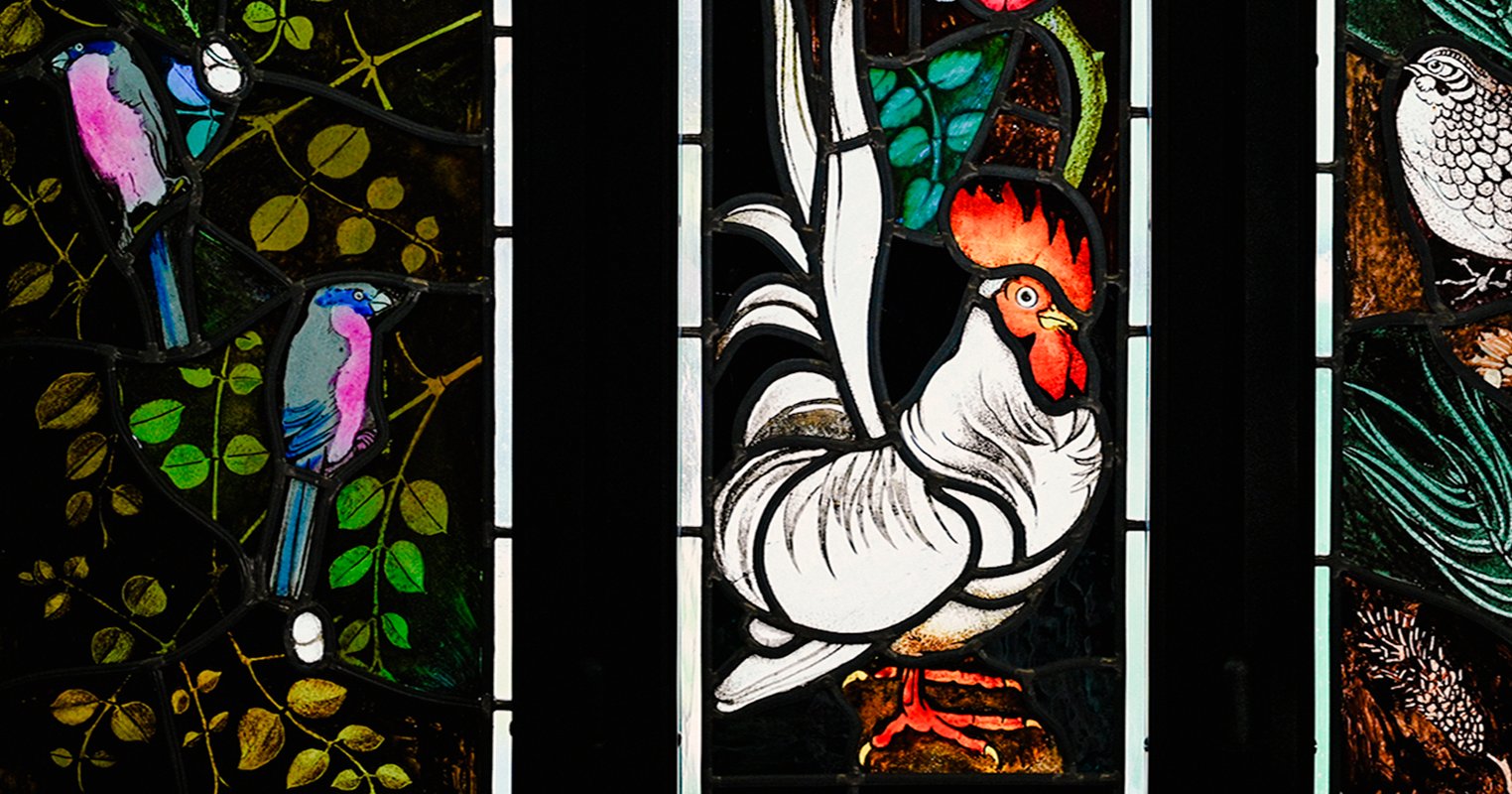
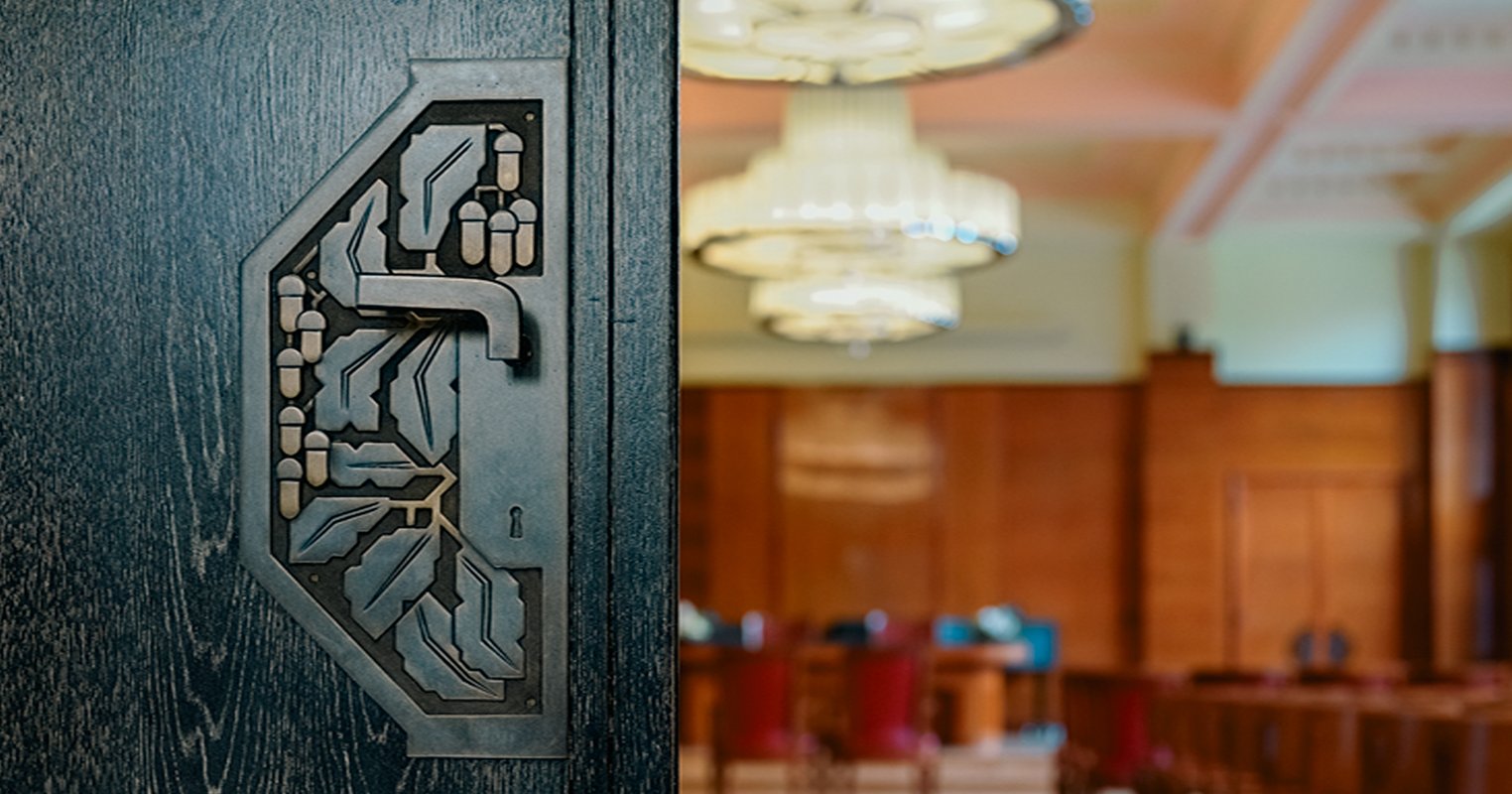
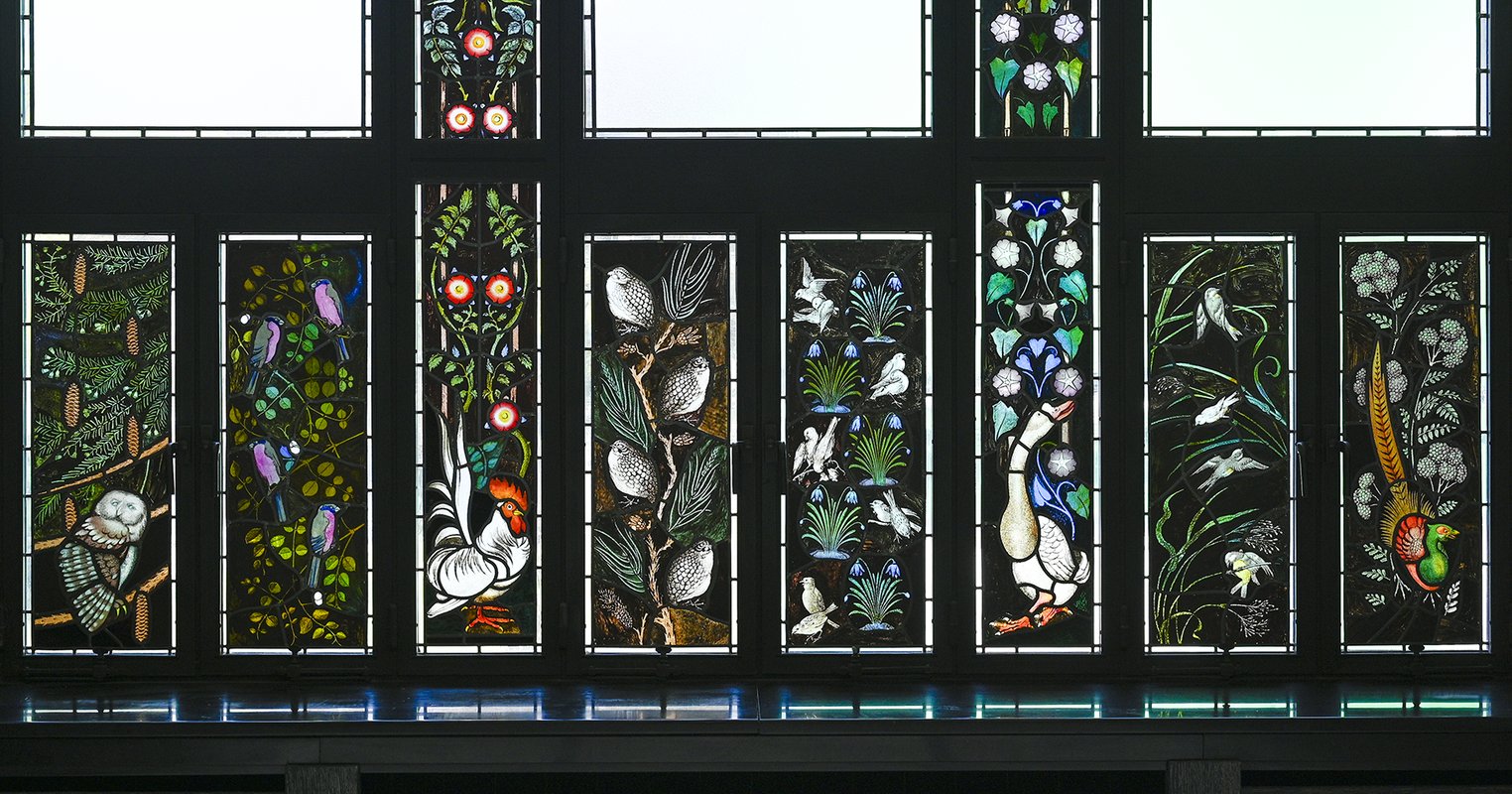
A striking feature of the town hall is the abundance of animal figures. Pheasants, owls, deer and all kinds of birds perched on branches of their favourite trees refer to the natural environment of Forest, which was a green, wooded municipality for a long time. Before the municipality changed and the population grew rapidly as a result of industrialisation, people lived here in a forest that we still know today: the Sonian Forest. The acorns on the fittings of the doors to the wedding hall also refer to this. The animals and natural elements are stylised, but remain recognisable. They connect the rational architecture with a more narrative, almost poetic layer which, seen by visitors and employees of the town hall, reinforced the local identity.
Fairy tales and legends
With his choice of figures in stained glass windows along the grand staircase, Dewin explicitly refers back to the history of the municipality of Forest. Fairy tale characters, including Little Red Riding Hood, the forest goddess Ondine and Genoveva of Brabant, are part of this iconographic programme. The presence of these characters underlines the importance of folk tales, education and collective imagination. By integrating historical and narrative elements, Dewin presents the town hall not only as an administrative centre, but also as a bearer of local memory and cultural continuity.
Forest: a modern municipality
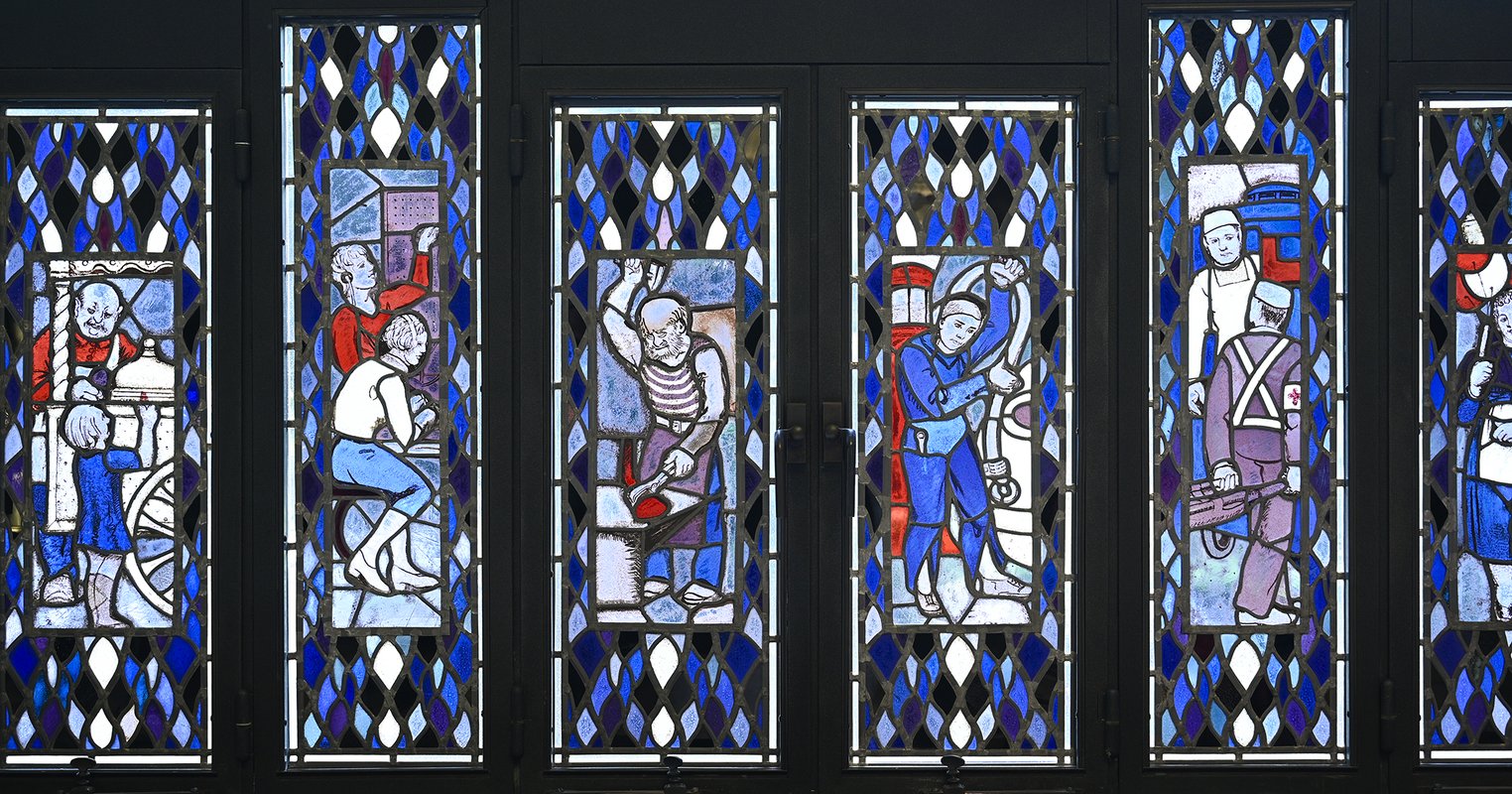
A particularly striking feature of the interior are the stained glass windows depicting various professions and social activities. In windows dominated by shades of blue and red, we recognise an ice cream seller, a paramedic, a telephone operator and a teacher, among others. These windows show the inhabitants of Forest as active participants in a modern society and are in keeping with the Art Deco ideal of progress, labour and organisation.
The work of Jean-Baptiste Dewin shows how nature in architecture can be more than just inspiration. By making animals and plants explicitly present, Dewin gave his buildings a recognisable identity and a strong symbolic meaning. If you would like to visit the town hall of Forest with a Korei guide, you can book a tour here.
