Funeral heritage: the symbolism and prestige of necropolises
Funeral heritage reveals how a society deals with memory, status, faith and transience. History becomes tangible in cemeteries, where it is carved in stone, depicted through symbolism, and arranged within the landscape.
The Laken Cemetery, the Dieweg Cemetery and the Brussels Cemetery in Evere, to name a few, are exceptional examples of the intertwining of death, art and urban development in Brussels.
These places are special today because they are experienced differently to how they were when they were first established. In the 19th century, cemeteries also served as public parks where people would stroll. Families would visit their deceased relatives there on Sundays and also use the occasion to socialise. The monumental grandeur served to display status and publicly commemorate the deceased. Today, our approach to death is more subdued; cremation and anonymous urn fields are becoming more popular. Consequently, historic cemeteries are increasingly regarded as heritage landscapes rather than active status symbols. The focus has shifted from mourning to reflection and from social competition to historical curiosity.
A reflection of power, art, and identity
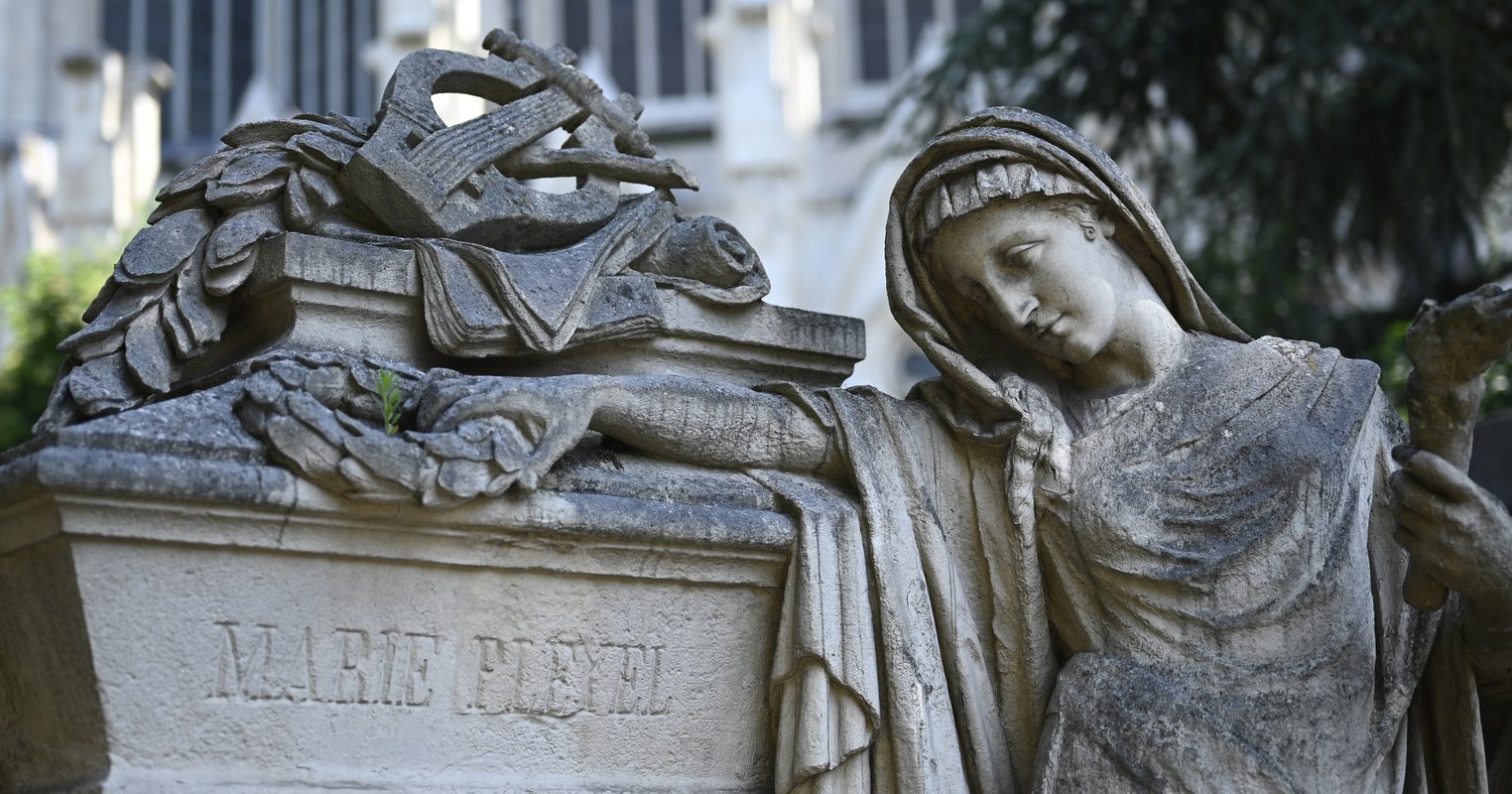
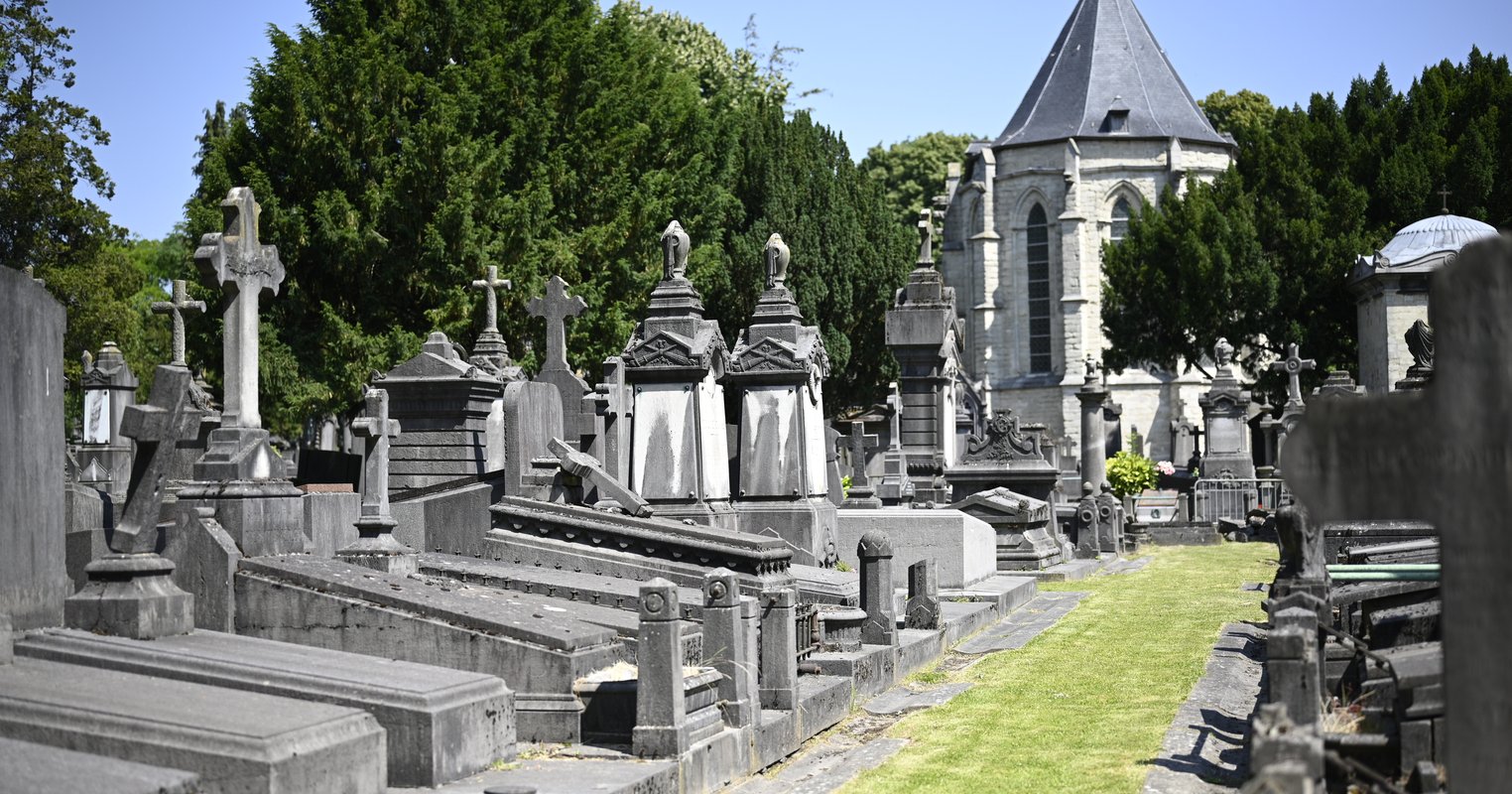
Anyone walking through the Laeken Cemetery enters a necropolis that became a prestigious resting place for the Brussels elite in the 19th century. Its proximity to the Royal Crypt at the Church of Our Lady in Laeken made the cemetery particularly attractive to those who wished to secure their place in history. Those buried here include the architect Joseph Poelaert, renowned for designing the Brussels Palace of Justice, and the legendary singer Maria Malibran.
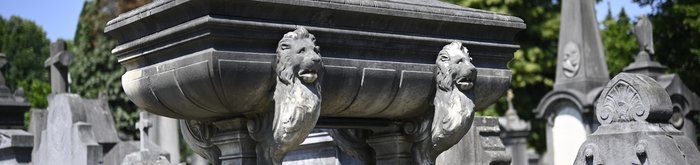
Today, the cemetery is an impressive open-air museum featuring monumental burial chapels in Neo-Gothic and Neoclassical styles. Sculptures of angels, weeping women (so called pleurantes), and symbols such as broken columns and inverted torches illustrate how mourning was expressed aesthetically and socially in the 19th century. Many of the graves were decorated by Guillaume Geefs, the Belgian sculptor who founded the Romantic sculptural tradition in Brussels. He left his mark on the city in the 19th century, notably with the monument on Martyrs’ Square.
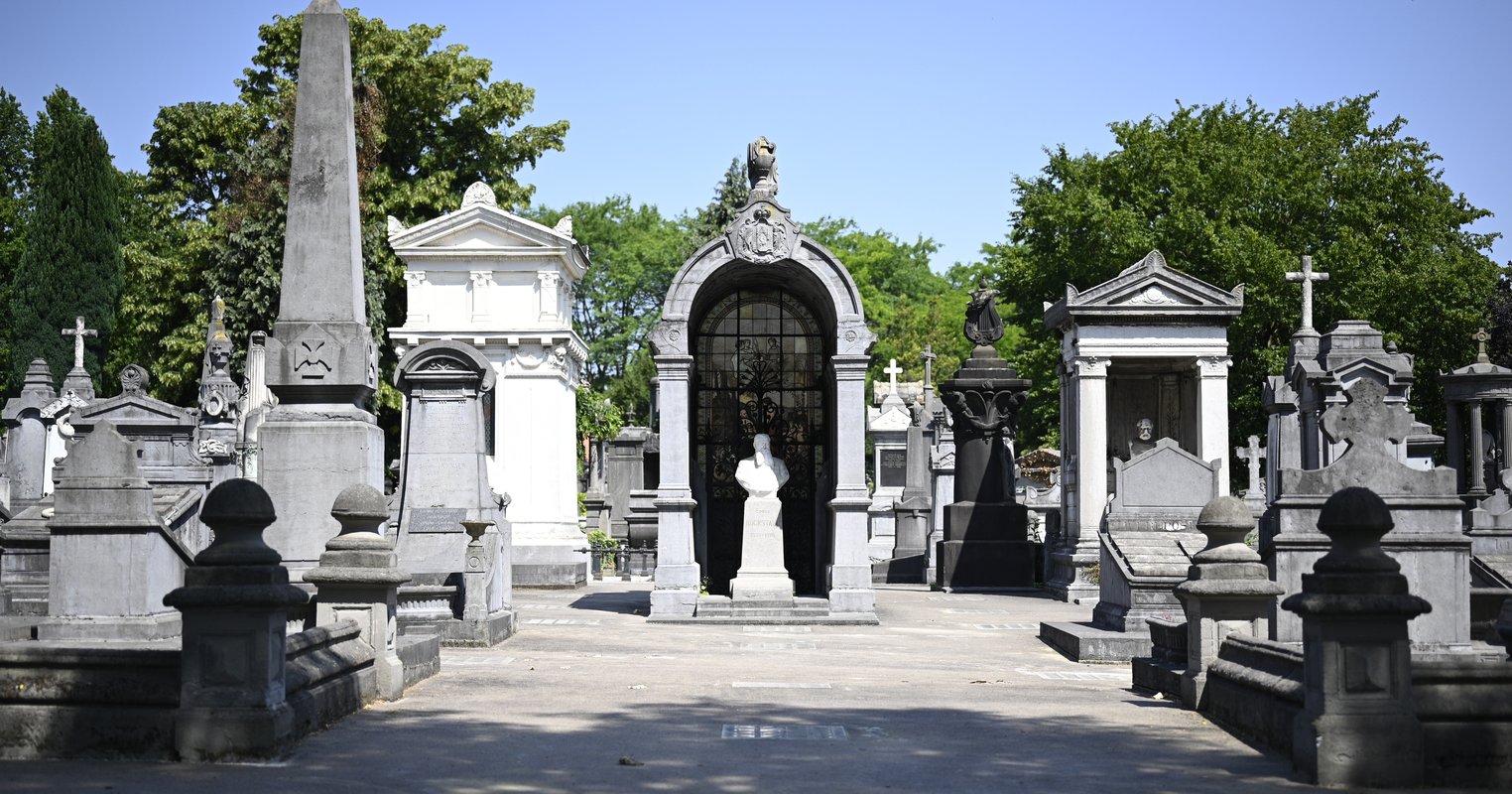
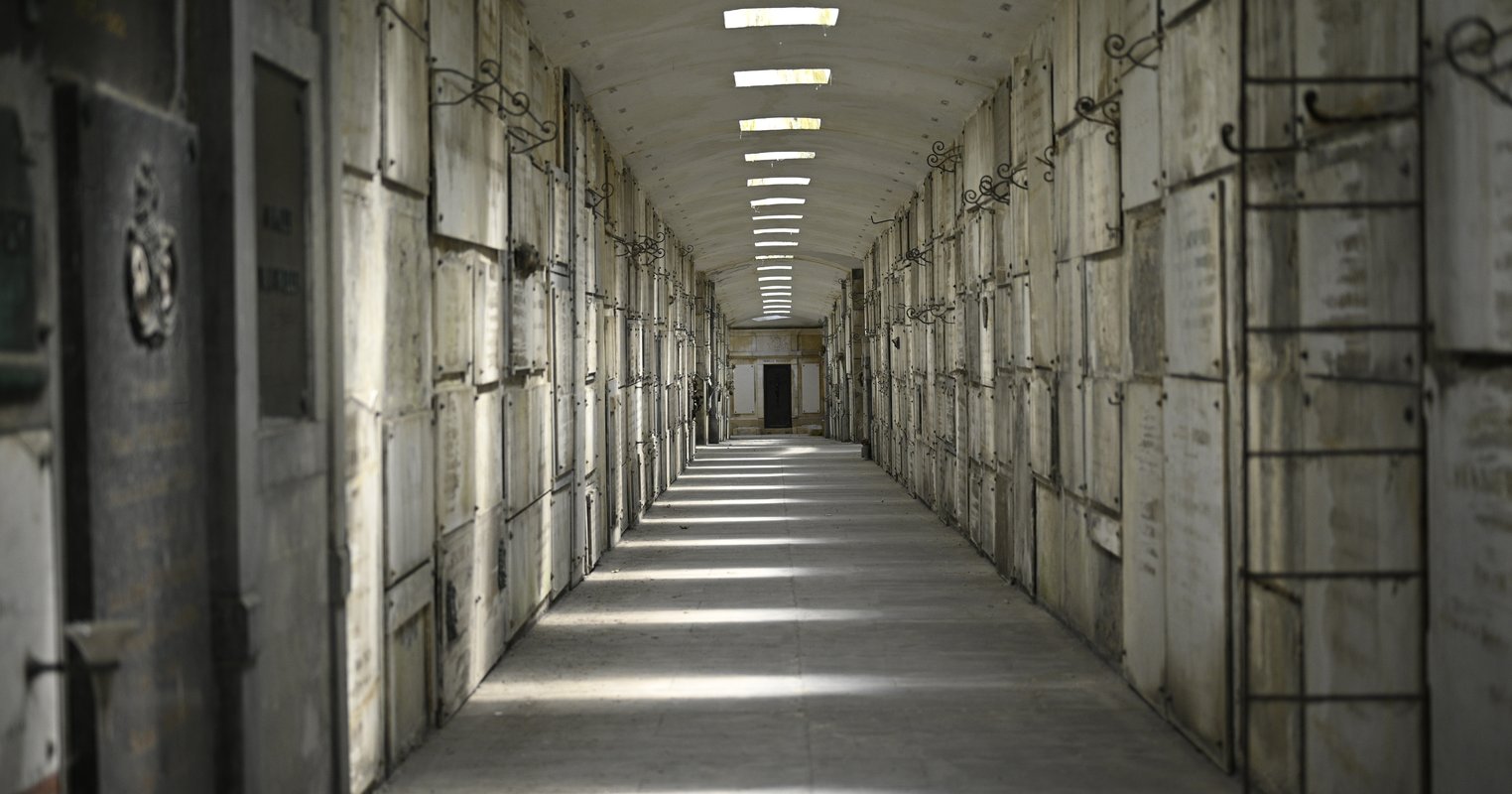
The underground burial galleries, which are unique in Belgium, reinforce the monumental character of the cemetery of Laeken, giving it the appearance of a city of the dead with avenues and architectural perspectives. Constructed in the first half of the 19th century, these catacombs reflect the architectural ambitions of the fledgling Belgian nation as well as the social changes of that era. After the Belgian Revolution of 1830, the bourgeoisie gained influence and sought new ways to project status and identity, even after death.
Thus, the cemetery in Laeken became a reflection of the social hierarchy: who could afford to have a burial chapel built, and who had to make do with a simple headstone? The aesthetics of mourning, with symbols such as broken columns representing life cut short and inverted torches representing extinguished light, were not only an expression of personal grief, but also a public display of wealth and culture. In an era when death was an ever-present part of daily life, such cemeteries offered a controlled, ennobling space for mourning, far removed from the chaos of rapidly growing industrial cities.
Overgrown paths and faded inscriptions
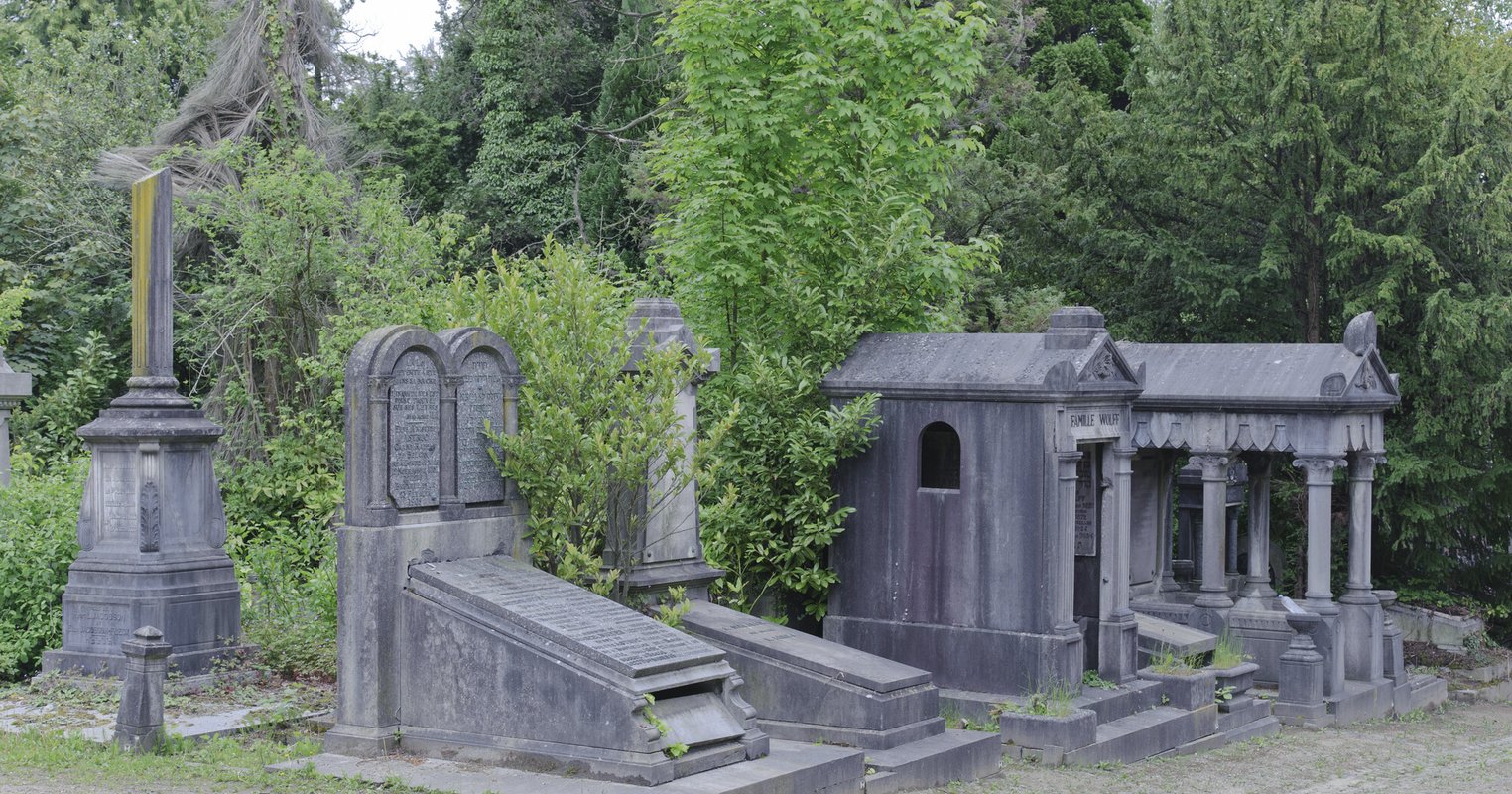
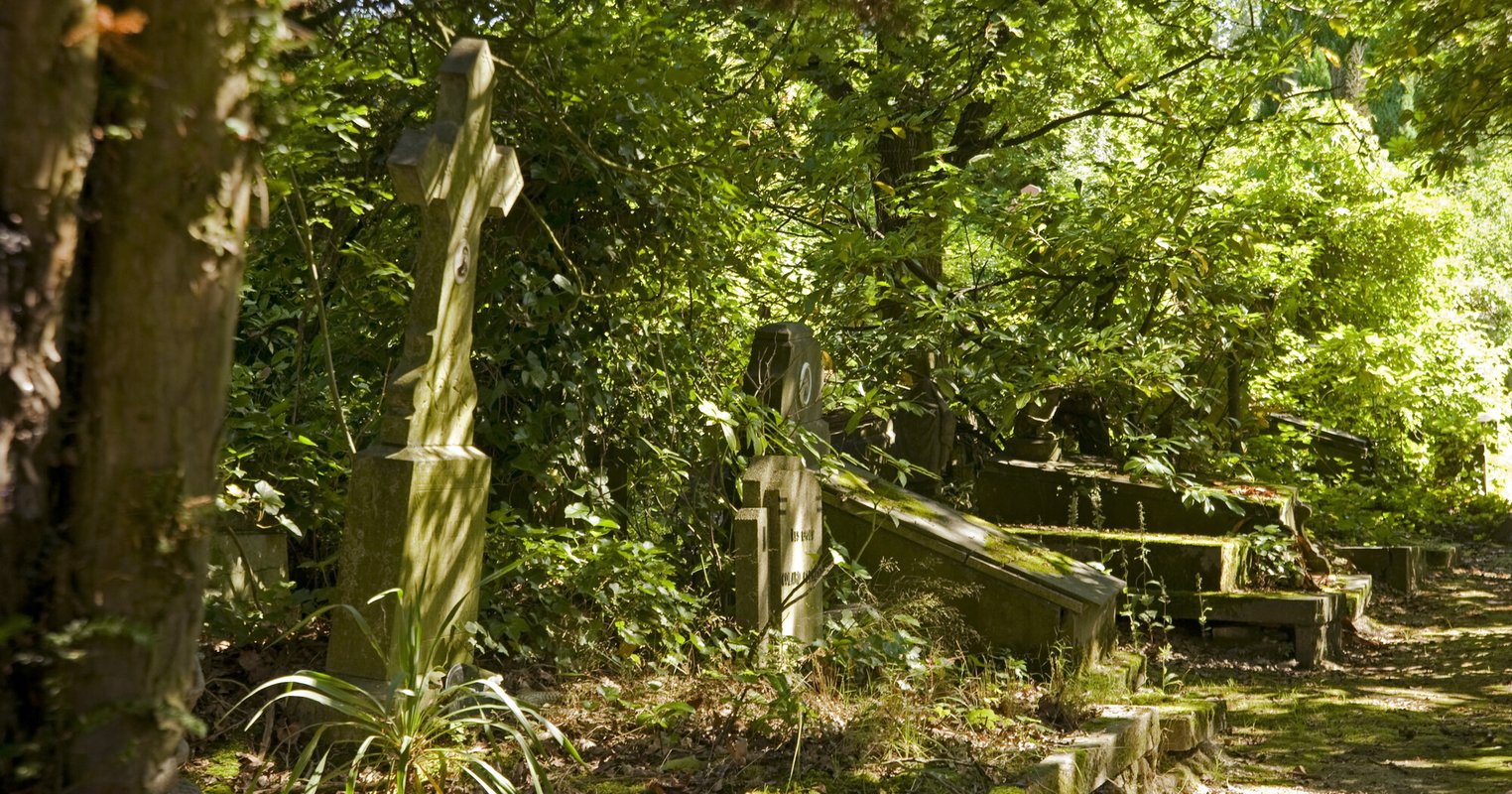
Since its closure in 1958, nature has been left to run wild at the Dieweg Cemetery in Uccle. Ivy covers gravestones, trees grow between mausoleums and moss obscures epitaphs. Those buried here include comic book artist Hergé, creator of Tintin, and Georges Eekhoud, a key figure in late 19th-century Belgian literature. The cemetery’s architecture reflects the prosperity of Brussels’ bourgeoisie at the turn of the century, but the passage of time has eroded the social hierarchy it once represented. What was once a status symbol is now part of a romantic, almost picturesque landscape where culture and nature merge.
Time seems to pass more slowly here; the cemetery is not just a place for the dead, but also a refuge for the living seeking peace and reflection. The dilapidated chapels and fallen crosses tell stories of times gone by, while the rustling of leaves and birdsong add a new layer of meaning. This place inspires artists, photographers and writers who come to capture traces of the past and the beauty of decay. The cemetery serves as a poignant reminder of the cyclical nature of life and death, and of how nature ultimately embraces and transforms everything. In a noisy and oppressive city like Brussels, Dieweg offers a rare oasis of silence and timelessness.
Brussels’ largest cemetery
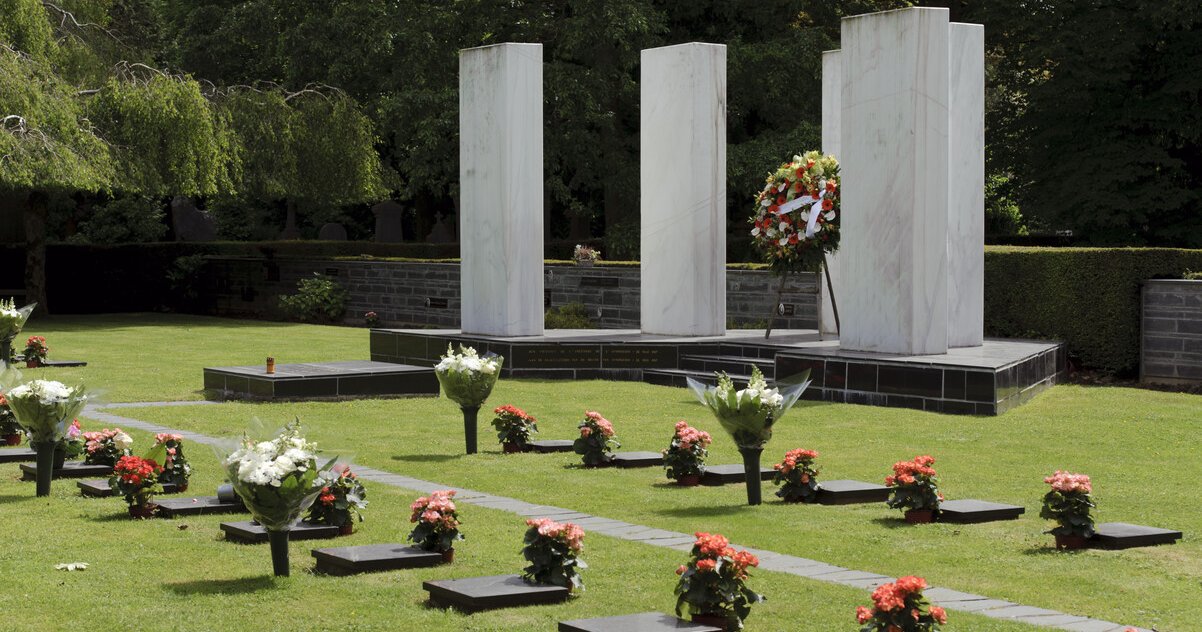
At Evere Cemetery, one can see the graves of local families who shaped village and later urban life, as well as military plots and more austere burial grounds reflecting 20th-century changes in attitudes towards death. The layout is more rational and less overtly monumental than that of Laeken. This makes the site particularly well-suited to understanding the transition from an exuberant culture of commemoration to more subdued and functional forms of burial.
One of the most impressive and moving monuments in the cemetery is the National Memorial to the Victims of the Innovation Fire. The 1967 fire in department store L'Innovation, which claimed 251 lives, shocked the entire country and led to stricter safety regulations for public buildings. The monument consists of a sober, modern structure with a central column and a bronze plaque engraved with the names of all the victims. The monument symbolises both collective grief and Belgian resilience. Contrasting with the exuberant 19th-century graves found elsewhere in the cemetery, it illustrates how 20th-century memorial culture evolved towards more collective and less individualised forms of mourning.
Why these cemeteries are worth a visit
Visiting these cemeteries is not a morbid experience, but rather a cultural journey of discovery. Visitors can stroll through more than a century and a half of urban history here. The names on the gravestones are those of the politicians, artists, industrialists and artisans who shaped Brussels into what it is today. The atmosphere varies greatly. In Laeken, for example, there is a sense of grandeur and tranquillity among the imposing burial chapels, while at Dieweg, an almost poetic silence reigns, with birdsong and rustling leaves setting the scene. In Evere, meanwhile, the atmosphere is more open and down-to-earth, with a direct connection to the local community.
Korei Guided Tours regularly organises open-enrollment walking tours of Dieweg Cemetery and Laken Cemetery. Check our calendar to see when you can sign up. If you would like to visit these places with your own group, club or team, you can find more information here.
A living dialogue with the past
Appreciating funerary heritage means recognising that these sites act as open-air archives. They reveal how architecture, religion, social relations and artistic trends converge in spaces that are both intimate and public. By organising guided tours of the Laken Cemetery, the Dieweg Cemetery and the Brussels Cemetery in Evere, we can explore this layered history. Visitors learn who is buried here and come to understand how each gravestone is part of a larger story about Brussels, memory and the evolving relationship between the living and the dead.