The evolution of Tour & Taxis, from rural meadow to urban covered city
The Tour & Taxis site offers a rich historical narrative, showcasing a multifaceted evolution of trade, industrial heritage and urban development. The area, which was once open pastureland used for stagecoach horses, has grown into a crucial logistics hub for Europe. It is now evolving into a mixed-use urban district, combining residential, commercial, cultural and green spaces. Gare Maritime, the former freight station, in particular, serves as a nexus between the past and the future: a monumental structure that has been reimagined as a sustainable, covered city where architecture, reuse and public space converge.
The Thurn und Taxis family established a European postal system for the Habsburgs in the 16th and 17th centuries, starting from Brussels. At that time, horses for the coaches grazed on the local meadows to the north of the city centre, just across the canal dug in 1550.
By rail
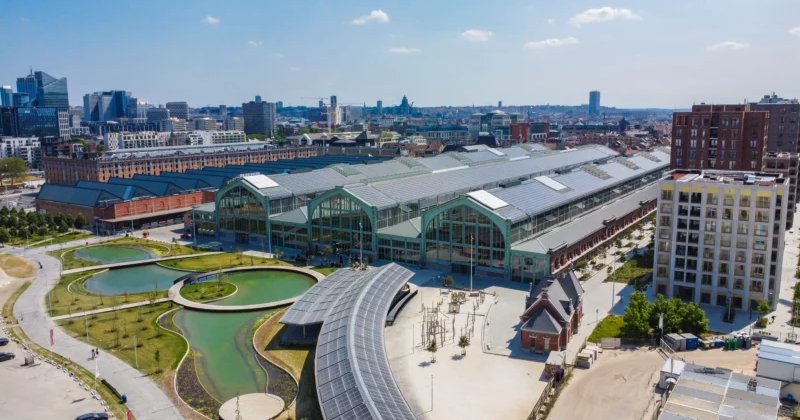
The arrival of the railway in the 19th century had a profound impact on the area, leading to significant changes in infrastructure, transportation, and economic development. Horses were replaced by trains that transported goods to and from all corners of Europe. From 1900 onwards, more than thirty hectares of land, strategically situated in proximity to the canal harbour, were utilised as a customs, distribution and storage area. The existing structures on the site, including the Gare Maritime, the Royal Warehouse, the stables and the post office, date from this period.
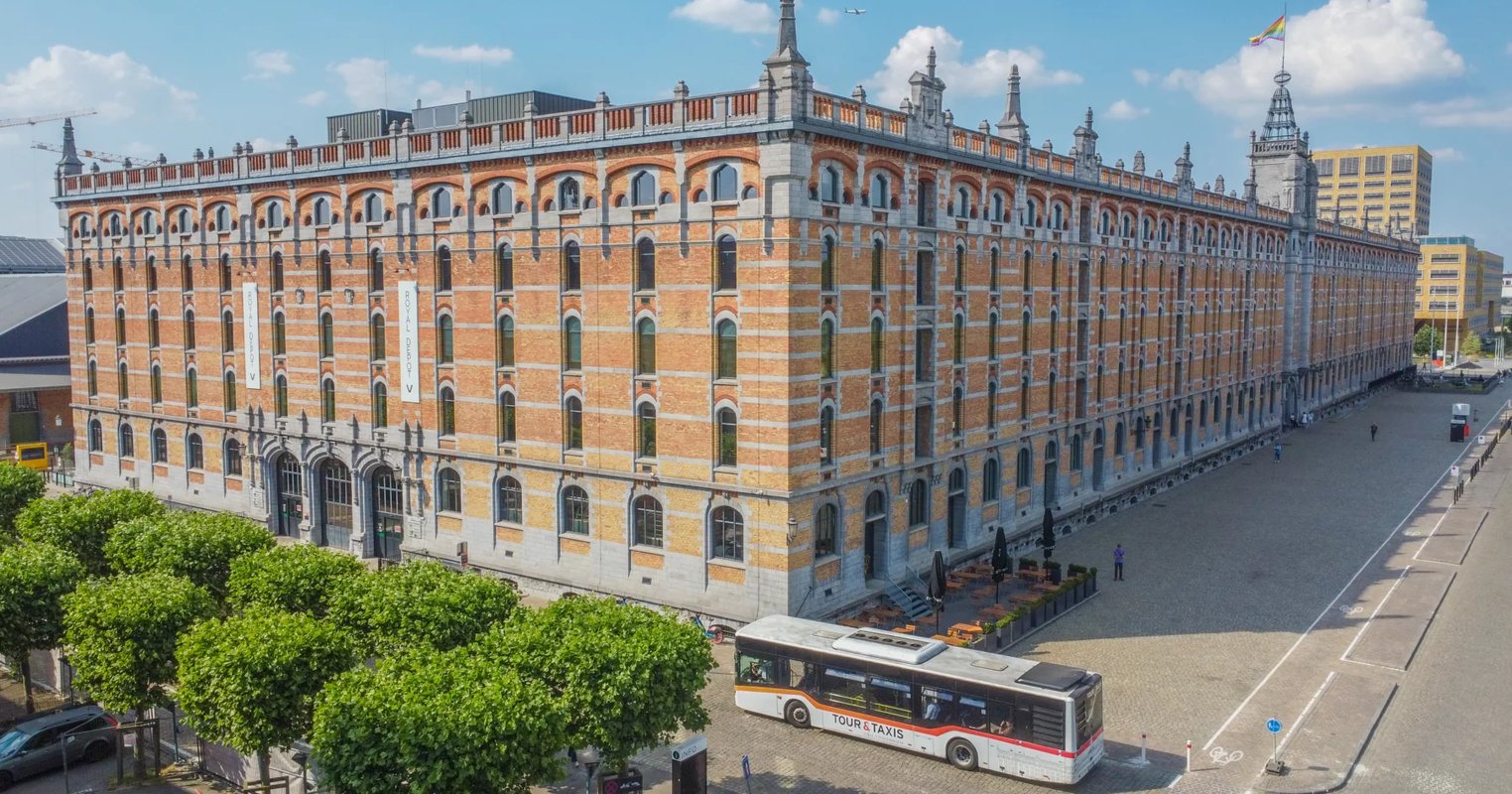
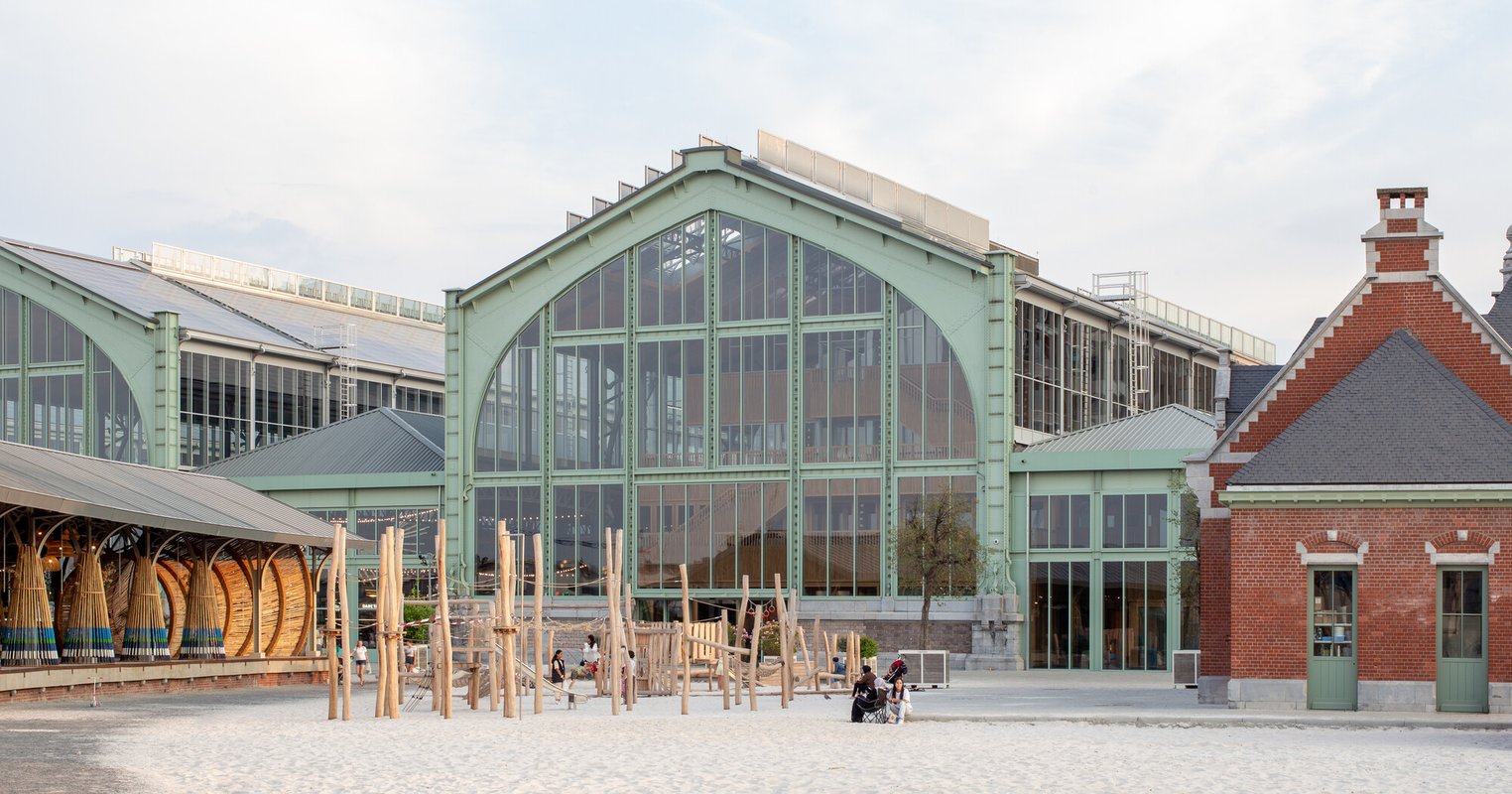
The Maastricht Treaty of 1993 brought to a conclusion the site's customs function, marking the start of a new phase in its history. Since 2005, approximately 50 companies have been based in the Royal Warehouse, including media and PR companies, insurance and law firms, as well as a spa and restaurants. The former post office building has recently been converted into a conference centre, and stables dating from the 1920s are used for events and smaller trade fairs.
Recent developments
The BEL building for Brussels Environment (Cepezed/Samyn & Partners, 2014) and the Herman Teirlinck building for the Flemish government administration (Neutelings Riedijk, 2017) are examples of office buildings that have been constructed. In addition, residential buildings have been completed (Jaspers-Eyers, NoA, Sergison Bates, AWG), are under construction or are being planned under the names Park Lane and Lake Side, as well as more office high-rises.
The driving force behind these projects is the property developer Extensa Group, the current owner of the site. The interventions extend beyond the boundaries of the Tour & Taxis area. One of the elements of the development is the nine-hectare L-28 park (Michel Desvigne / Bas Smets), which extends towards the neighbouring district of Laeken. Becopark has been developed as a green corridor that emphasises soft mobility. This new infrastructure connects the site to the city centre along the canal.
Covered city
At the heart of these developments, Gare Maritime cannot be seen as a separate project, but as a central element. The impressive structure, measuring 140 by 280 metres, is formed by seven naves over rows of cast-iron columns. Built in 1902, when it was the largest freight station in Europe, the covered hall plays a crucial role on the site. A mix of functions, such as a food hall, offices, shops and (rentable) public space, ensures that this place has something to offer everyone.
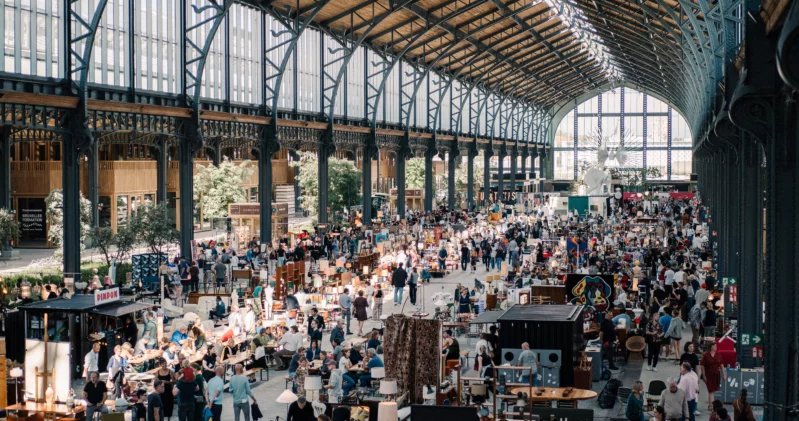
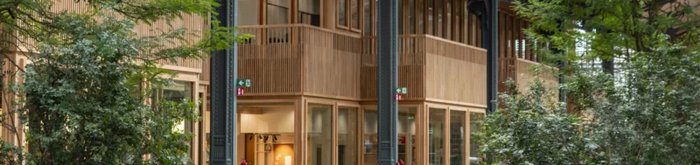
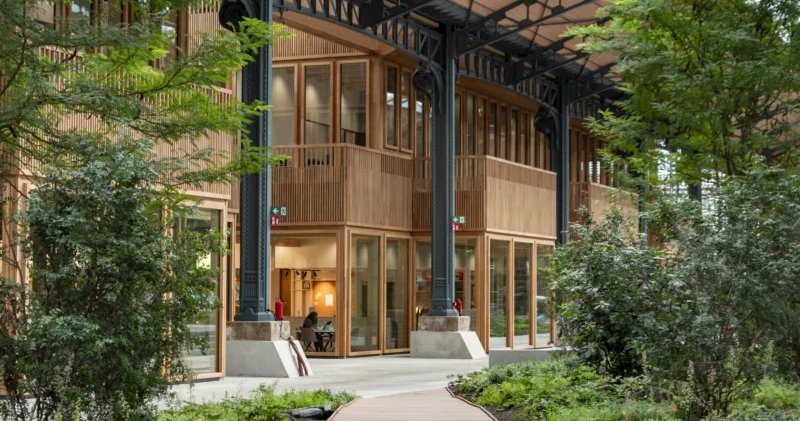
Following an initial consultation with various architects, the architectural firm Neutelings Riedijk was selected to oversee the transformation. The decision was taken to accommodate the requested 45,000 square metres of office and commercial space in twelve compact "pavilions" that span the entire height of the hall. The strategic placement of these pavilions serves as a testament to the rich heritage of architecture. The pavilions' clear structure and materialisation align with the repetitive rhythm of the old hall, emphasising its character and traditional monumentality.
The pavilions have three floors plus an additional mezzanine floor, allowing most of the impressive space of the former station building to be kept free and available for visitors to experience. As a hybrid of boulevard and marketplace – twice the size of Brussels' Grand Place – a freely usable space has been created. This space has already hosted events such as a padel tournament and a comic strip festival. The recently constructed smaller streets run between the pavilions and under intersecting staircases. The outcome is a covered "city where it never rains", as the architects themselves describe it.
Discover it for yourself
Should you wish to see the impressive Gare Maritime with your own eyes and learn more about the history and future of the Tour & Taxis site, you can book a guided tour with Korei Guided Tours. Our guide will make connections, highlight details you might otherwise miss and place everything in a broader Brussels and historical context. In this way, Tour & Taxis is transformed from a mere site to be walked through into an attraction that offers a unique experience.
