What is the difference between Art Nouveau and Art Deco?
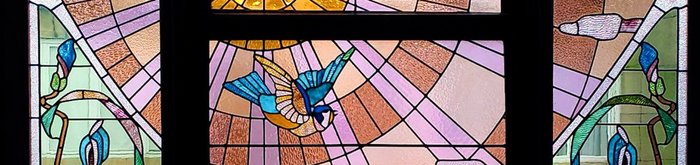
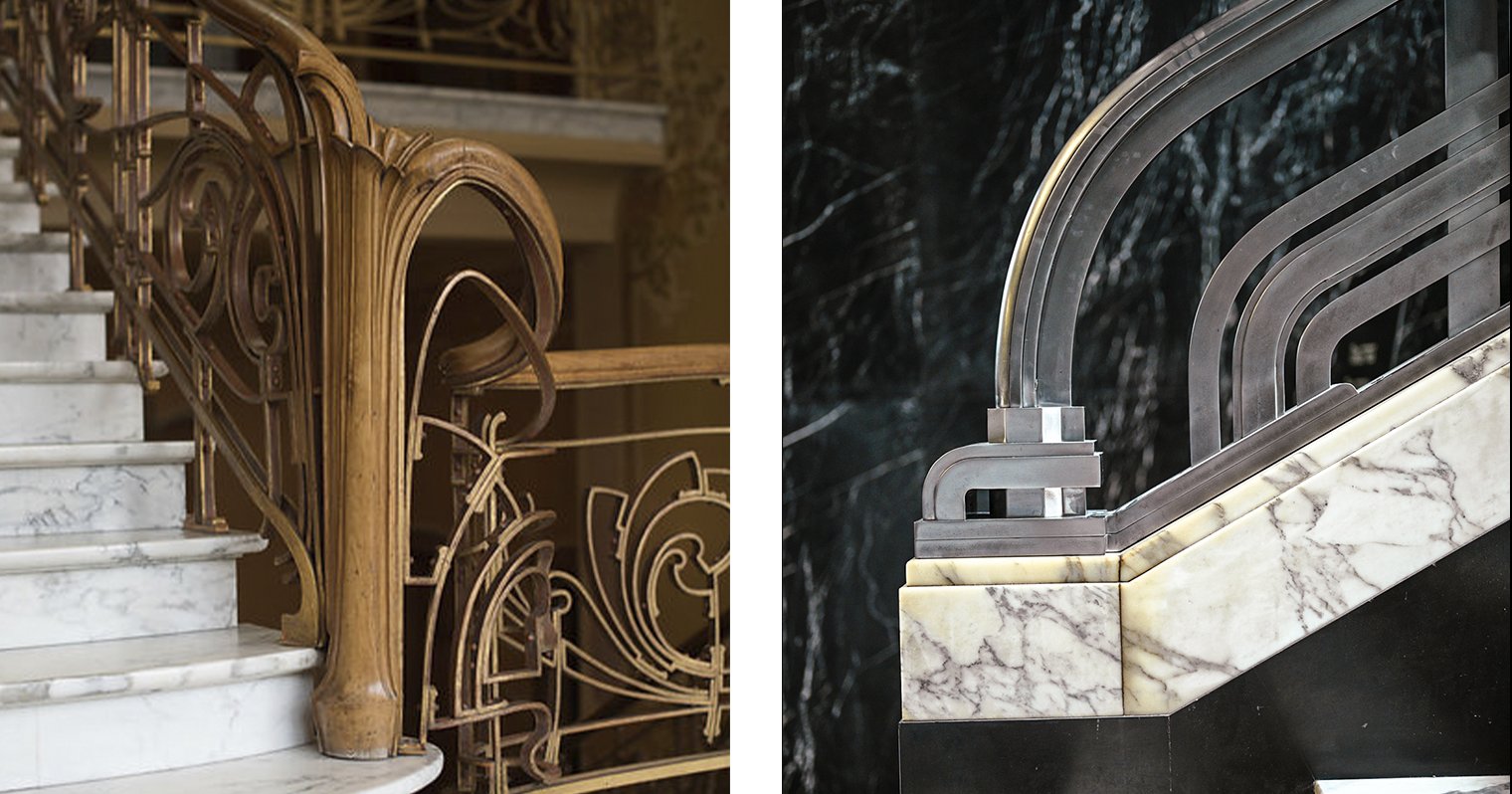
Both Art Nouveau and Art Deco reflect crucial moments in European cultural history, forming a visual narrative about change, progress and identity when considered together. Art Nouveau is characterised by flowing lines, plant motifs and a strong artisanal style, where architecture, interior design and decoration are inextricably linked. Popular from the 1920s onwards, Art Deco opts for clean geometry, symmetry and luxurious materials, exuding modernity, progress and urban elegance.
Brussels is an ideal place to learn about the differences between the two movements. Both movements have left their mark on the cityscape, but differ greatly in terms of atmosphere, form and ideology. If you look closely, you will not only see beautifully designed buildings, but also two different moments in Brussels' history.
Born in Brussels
Art Nouveau emerged at the end of the 19th century, during a period of rapid industrialisation and social unrest. It can be interpreted as a reaction to the dehumanising effects of the Industrial Revolution, representing a search for beauty, craftsmanship, and harmony with nature. In Brussels, the work of architects such as Victor Horta and Paul Hankar has permanently shaped the streetscape, and Art Nouveau embodies the belief that art and architecture can elevate and humanise everyday life. Art Nouveau is generally recognisable by its flowing lines, asymmetry, and rich, plant- and flower-inspired decoration. Architects wanted to move away from rigid historical neo-styles, seeking a new, modern design language.
Victor Horta's Hôtel Tassel (1893) is widely regarded as the first building in the Art Nouveau style and is considered the absolute starting point of this movement. Built for ULB professor Émile Tassel, the mansion is located near Avenue Louise, an area where the Brussels bourgeoisie wanted to display their new, progressive identity.
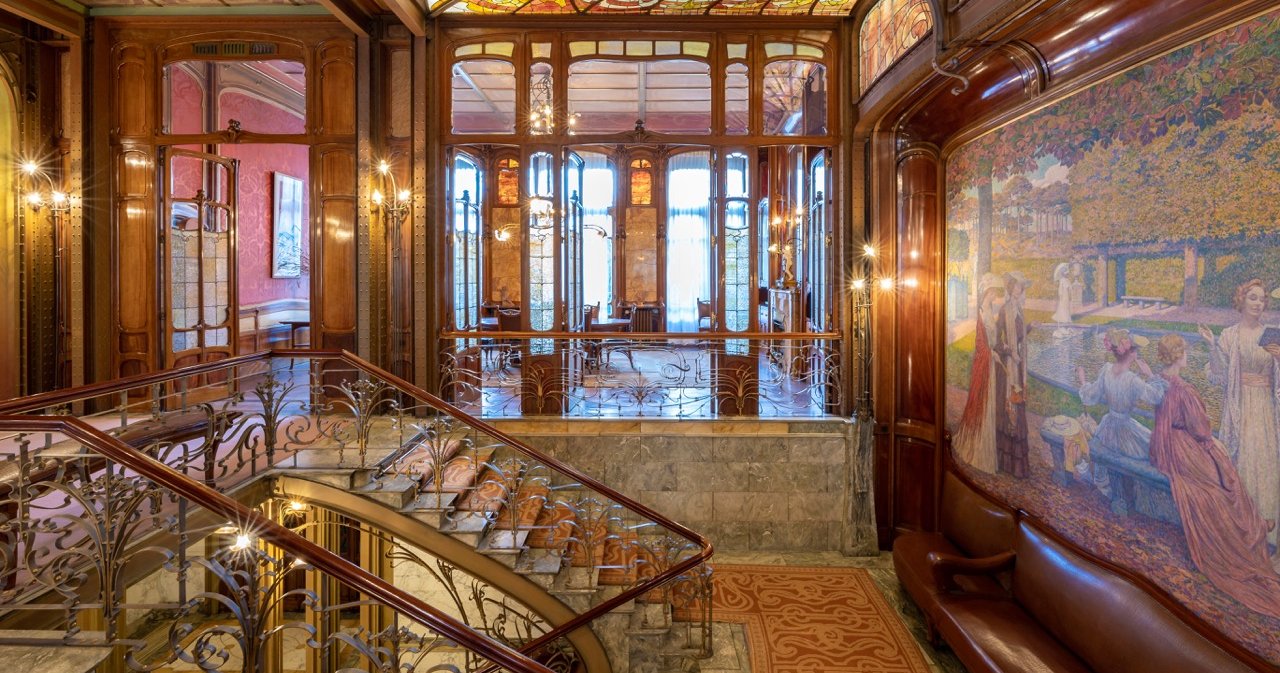
Another iconic example is the Hôtel Solvay, also designed by Horta and completed later. It is a total design in which the façade, interior, furniture and even door handles form a harmonious whole. Since 2000, this mansion has been a UNESCO World Heritage Site. The Devalck House in Schaerbeek follows suit, on a smaller scale, with its refined ornaments and craftsmanship details. Here, Art Nouveau feels personal, almost intimate, inviting you to take your time and look closely.
After the Great War
The First World War (1914–1918) changed everything. The flowing lines and organic shapes of the past gave way to the geometry, symmetry and luxurious materials that reflected the optimism of the interwar period. Art Deco embraced the modern world, including technological progress, speed, globalisation, and a new, self-aware urban lifestyle. There was a greater emphasis on materials as decorative elements.
A key moment in the Art Deco movement's breakthrough was the 1925 Exposition Internationale des Arts Décoratifs et Industriels Modernes in Paris. This world exhibition not only lent its name to the style, but also signalled a clear departure from the past. Unlike Art Nouveau, which emphasised craftsmanship and uniqueness, the exhibition presented an aesthetic combining luxury with industrial production and modern technology.
Clean lines, geometric shapes, and precious materials such as chrome, lacquer, and exotic woods dominated the pavilions. Radiating self-assured optimism, the exhibition confirmed Art Deco as the visual language of a new era in which progress, elegance and international appeal were central.
Horta and art deco
As the designer of the Belgian pavilion at the Paris World Exhibition, Victor Horta was an architect rethinking his past. While Horta had become internationally famous for the organic lines, plant motifs and craftsmanship of Art Nouveau, the pavilion demonstrated a clear shift towards austerity, geometry and monumental clarity.
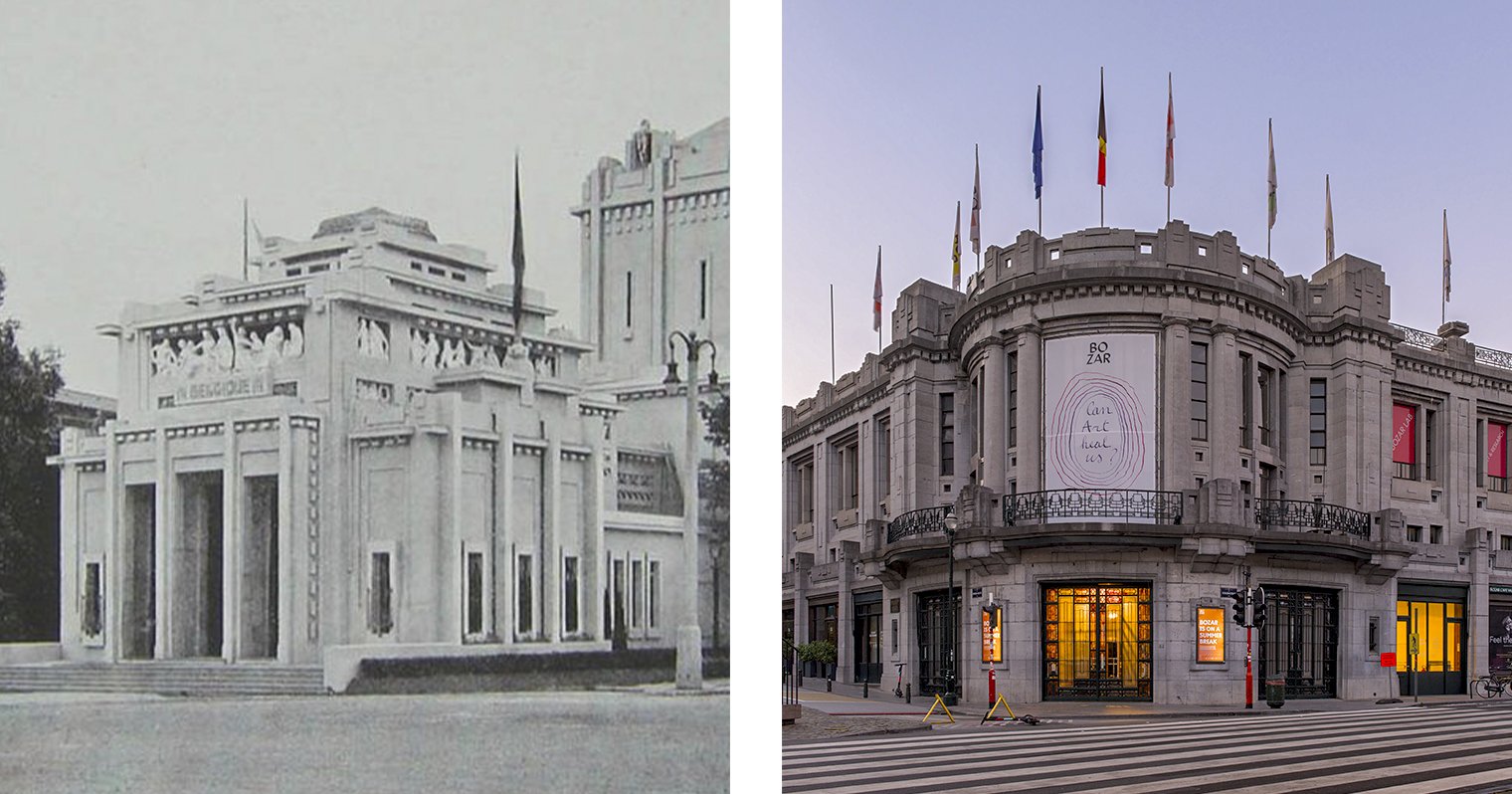
This transition was not a break, but a conscious evolution. Horta continued to strive for total works of art, adapting his design language to a new era in which rationality, industrial techniques, and modern representation were central.
Examples of Horta's personal transformation can be seen in Brussels in projects such as the Centre for Fine Arts (also known as BOZAR), for which the plans had already been drawn up by that time, and the Central Station, which was completed after his death by Maxime Brunfaut. In these buildings, Horta translates his ideals into a more subdued art deco-style architecture in which functionality, structure, and urban monumentality take precedence without denying the humanistic foundation of his earlier work. Thus, Horta not only embodies the transition from Art Nouveau to Art Deco, but also the broader cultural shift from fin de siècle idealism to interwar modernity.
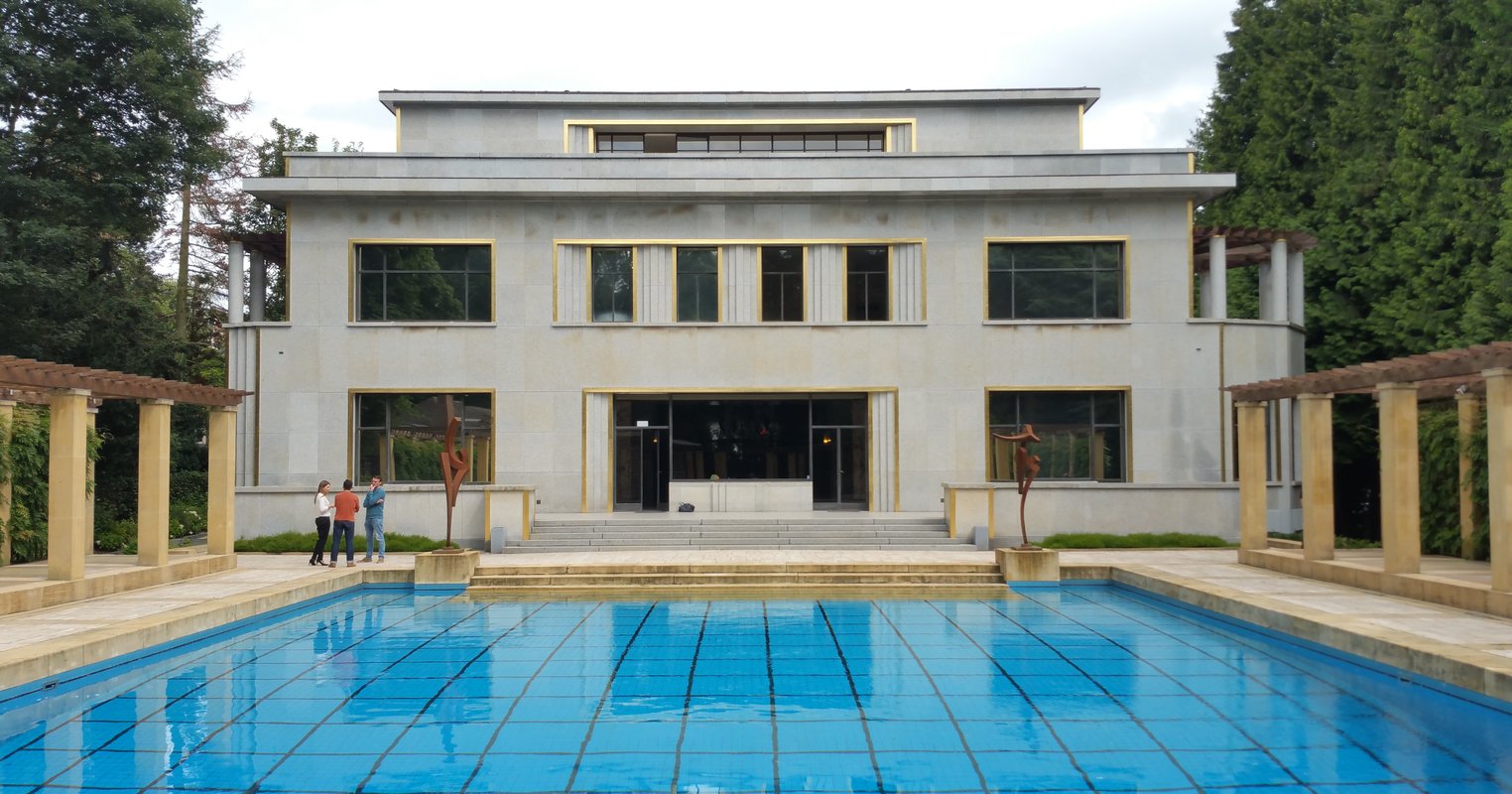
Other examples of Art Deco in Brussels
The monumental, perfectly balanced Villa Empain, constructed from noble materials such as granite and bronze, is a prime example. In contrast, the Van Buuren Museum and Gardens show how Art Deco can also be warm and homely, with attention to comfort and art according to the specific wishes of the residents, David and Alice van Buuren. Along Avenue Roosevelt, you can see how the style was applied to larger buildings and avenues, with impressive volumes and a certain grandeur. In Brussels, Art Deco can be found not only in residential areas outside the city centre, but also in the city centre itself.
While Art Nouveau envisioned an artistic future grounded in nature and craftsmanship, Art Deco signified a bold stride towards modernity. Together, they tell the story not only of two art movements, but also of a city and a society in constant transformation.
Join Korei on a guided tour of the Art Nouveau buildings and neighbourhoods
- Hôtel Solvay
- Hôtel Max Hallet
- Art Nouveau in the Louise District
- Art Nouveau in the Northeast Squares
- Art Nouveau where you least expect it: surprising Schaerbeek
- Around the ponds of Ixelles
